
Rainy season
Temporary Roofs and Shrink Wrap for BC Job Sites
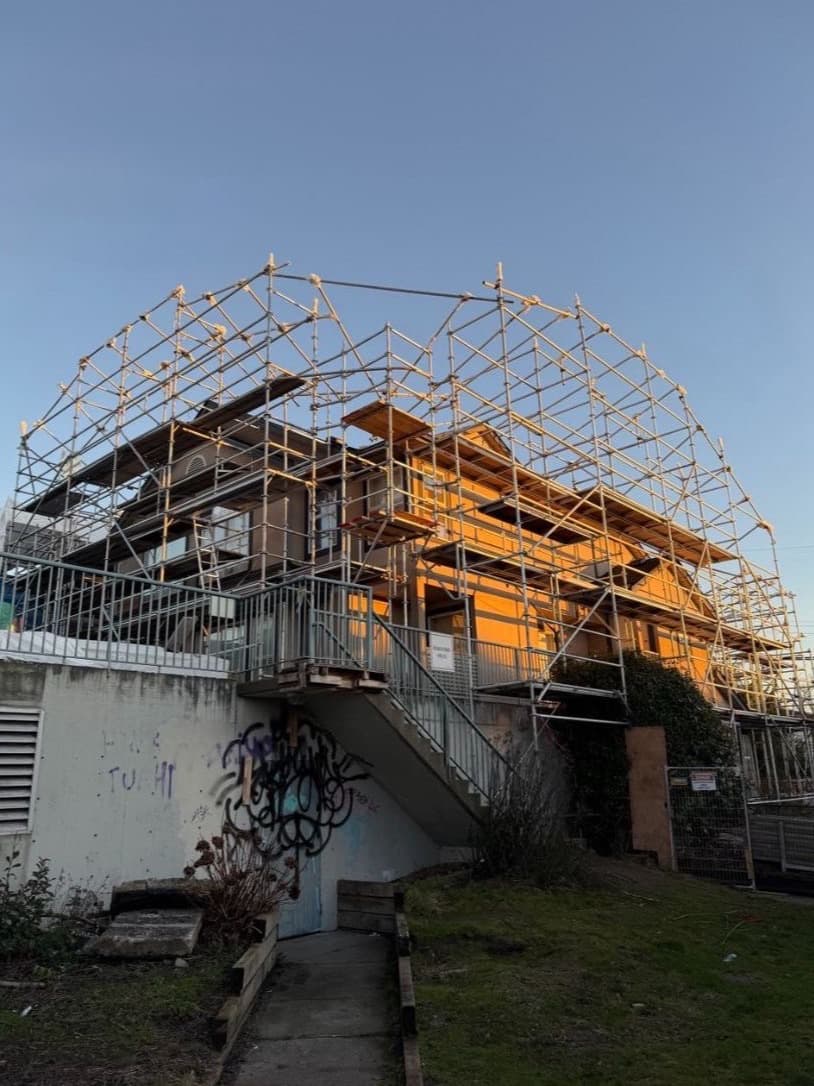
A roof that comes off in November leaves the building open to the whole wet season. We build a tube-and-clamp frame over it, close it in with shrink wrap, and keep it tight until the new roof is on.
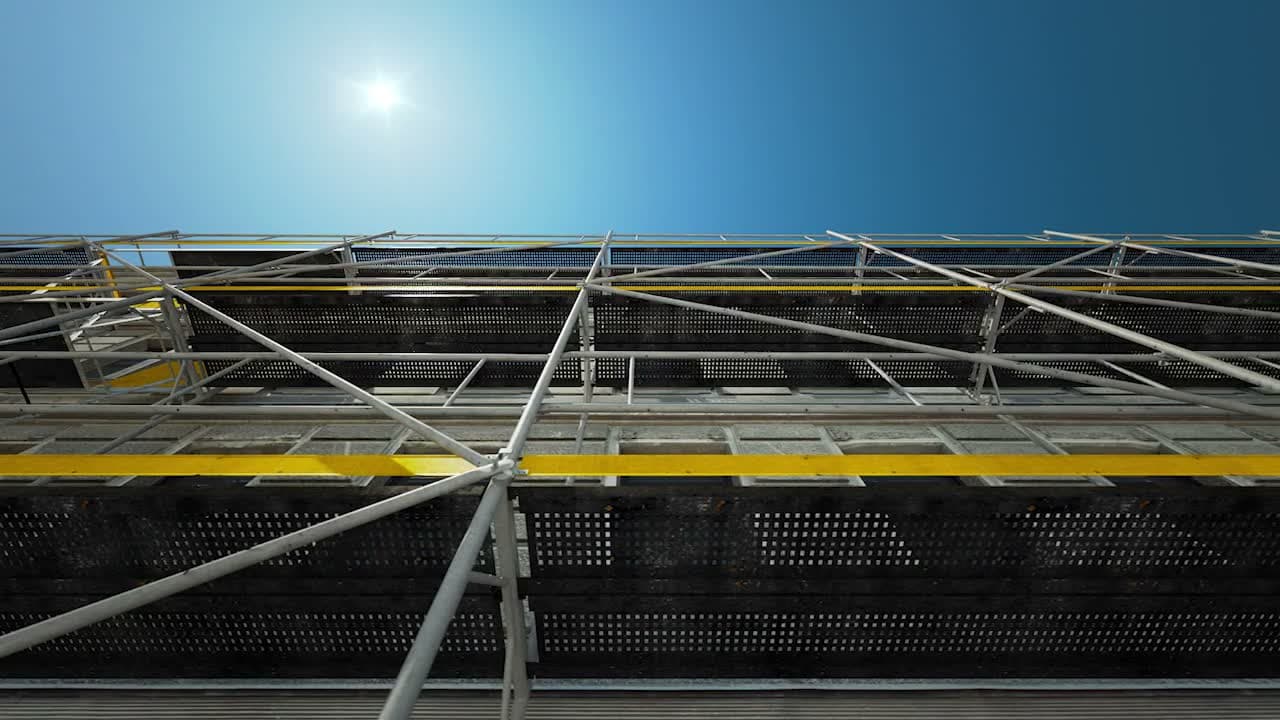
- Tube-and-clamp roof frame over the roof line
- Heat-shrunk sheeting, welded seams, no flapping tarps
- Stairs and access doors built into the enclosure
- Estimate typically back in 1-3 business days
Get a temporary roof estimate
Send drawings, specs or a few photos. We come back in one to three business days.
How a shrink wrap temporary roof works
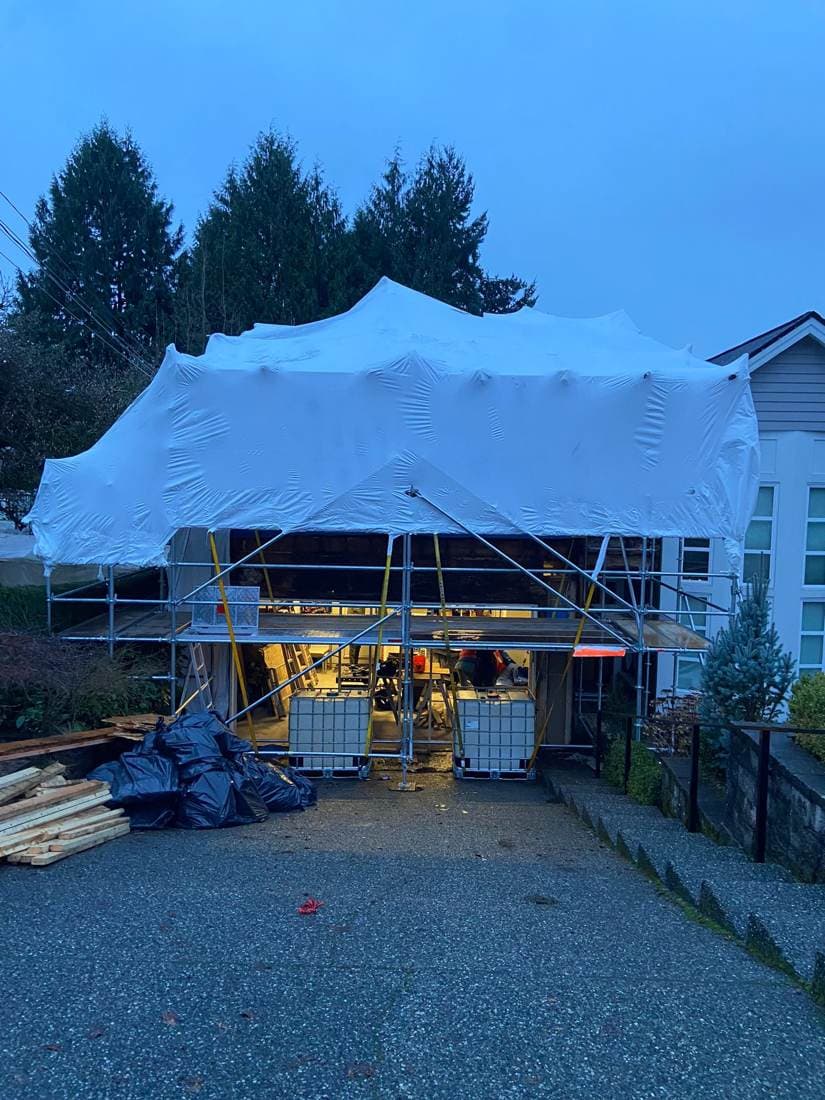
A shrink wrap temporary roof is a scaffold frame built over the roof line and closed in with heavy polyethylene sheeting. The sheet is pulled over the frame, welded at the seams and heat-shrunk tight, so it sheds rain and does not flap in the wind. Under it the old roof can come off and the new one can go on in any weather. Wrap the scaffold on the walls as well and the whole building becomes one working envelope for the trades.
What the job includes
Everything below runs under the same contract as the temporary roofing.
Frame layout
Span, pitch and tie-ins are set at the site assessment, with stamped drawings where the span or the loads call for them.
Roof frame and access
A tube-and-clamp frame over the roof line, with scaffold access and stairs up to the roof level for your crews.
Shrink wrap enclosure
Sheeting pulled over the frame, welded and heat-shrunk. The walls can be closed in too, so the space under the roof holds heat.
Repairs and dismantle
Storm damage and access cuts get repaired while the roof stands. When the new roof is on, the wrap and the frame come down.
Where it fits
A temporary roof earns its cost wherever a building stays open to the sky for weeks.
Re-roofing
Roof replacement on occupied buildings, where a wet attic or a leak into the units below costs more than the cover.
Envelope remediation
Strata and commercial envelope repairs that need the walls and the roof dry for membrane and sealant.
Fire and storm damage
Buildings opened up by a fire or a storm that have to be closed in before the repair can start.
Questions we get
What contractors ask before booking temporary roofing.
Do you build temporary roofs?
Yes. We build the frame from tube and clamp over the roof line and close it in with shrink wrap. The layout depends on the span, the pitch and how long the roof stays open, and it is set at the site assessment.
Can the walls be wrapped as well?
Yes. The roof and the scaffold on the elevations can be wrapped as one envelope, with doors cut where your crews need them.
Who looks after the wrap during the job?
We do. Storm damage and access cuts are repaired while the roof stands, so the envelope stays closed.
What do you need for a temporary roof estimate?
The address, the roof size or drawings, how long the roof will be open, and a few photos of the roof and the access around the building. Drawings give the most accurate number.
Often booked together
One contract and one crew covers more than one of these on the same site.
Need temporary roofing on your site?
Send drawings or a site address and we will come back with an estimate in one to three business days.