The 22nd-floor teardown starts at 7 a.m. By 10 a.m., two labourers are pushing wheelbarrows of drywall onto the material hoist, cycling down, unloading into an open bin at grade, cycling back. By noon the hoist is jammed with debris runs, the framing crew can’t move materials up, and the super is on the phone asking why nothing on the schedule is moving. Nobody put a chute on the plan. Now everything upstream stops.
That’s the sharp end of what happens on a multi-storey job without a proper debris chute. Garbage chute rental on construction sites is one of those line items GCs look at once, decide it’s optional, and then eat the cost of a delay that’s five to ten times what the chute would have cost. On tight Metro Vancouver sites, where you’re often working against a rain window, a strata notice, or a City of Vancouver noise curfew, that math gets worse.
Where chutes actually save the schedule
Every multi-storey teardown, envelope job, or heavy refit produces debris. Old cladding, membrane, framing, drywall, roofing tear-off. All of it has to come down. You have three basic options: hoist, chute, or manual (stairwells, hallways). Manual dies past floor four. Hoist works, but the same hoist is usually moving trades, tools, and materials up. Bury it in debris runs and nothing else moves.
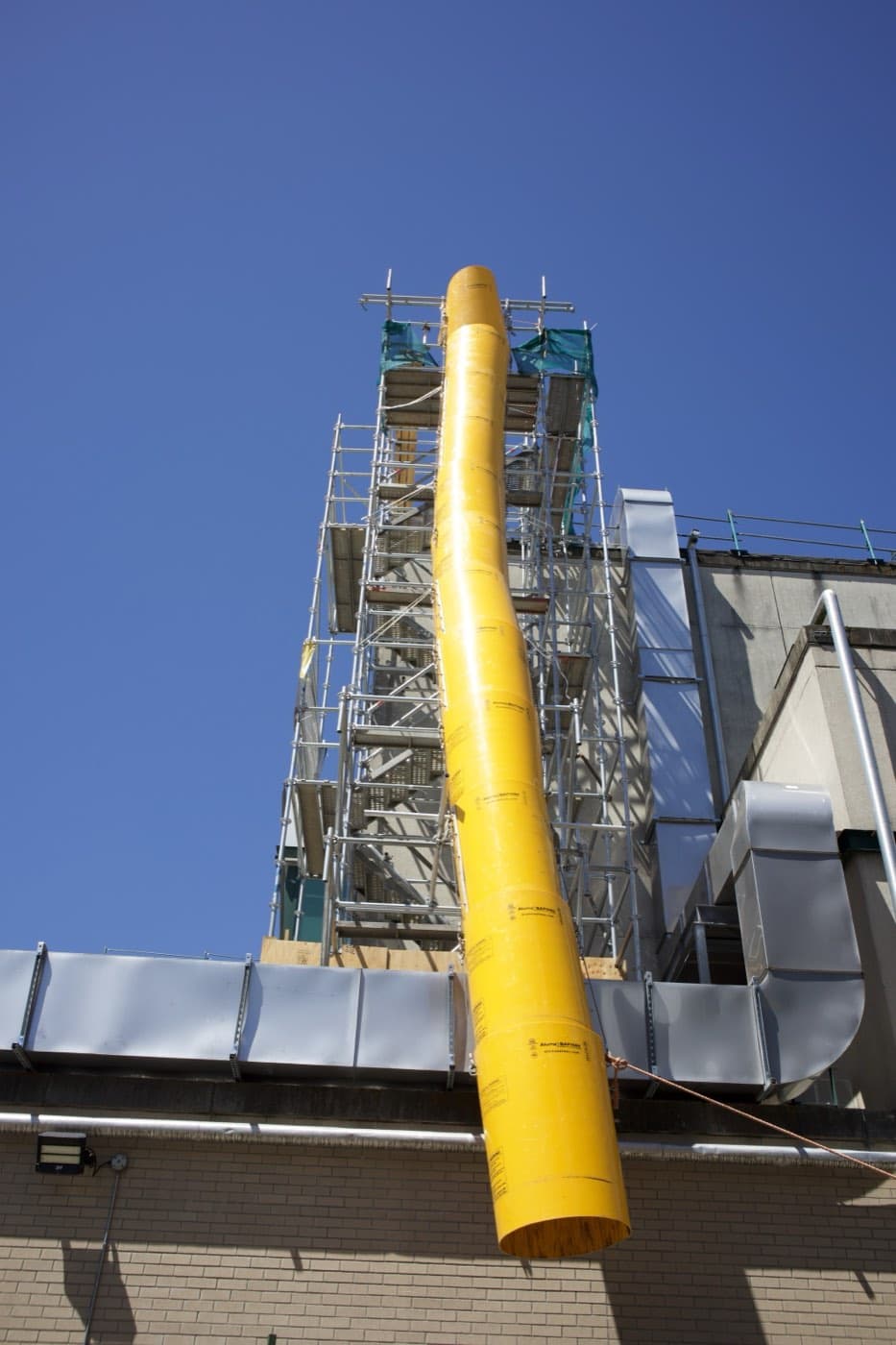
A properly placed rubbish chute pulls the debris flow off the hoist entirely. One or two labourers on the demo floor feed the chute, everything drops to a covered bin at grade, a wheeled bin swap keeps material flowing. The hoist stays free for personnel and material. Framers frame, painters paint, and the super stops texting you at 11 p.m.
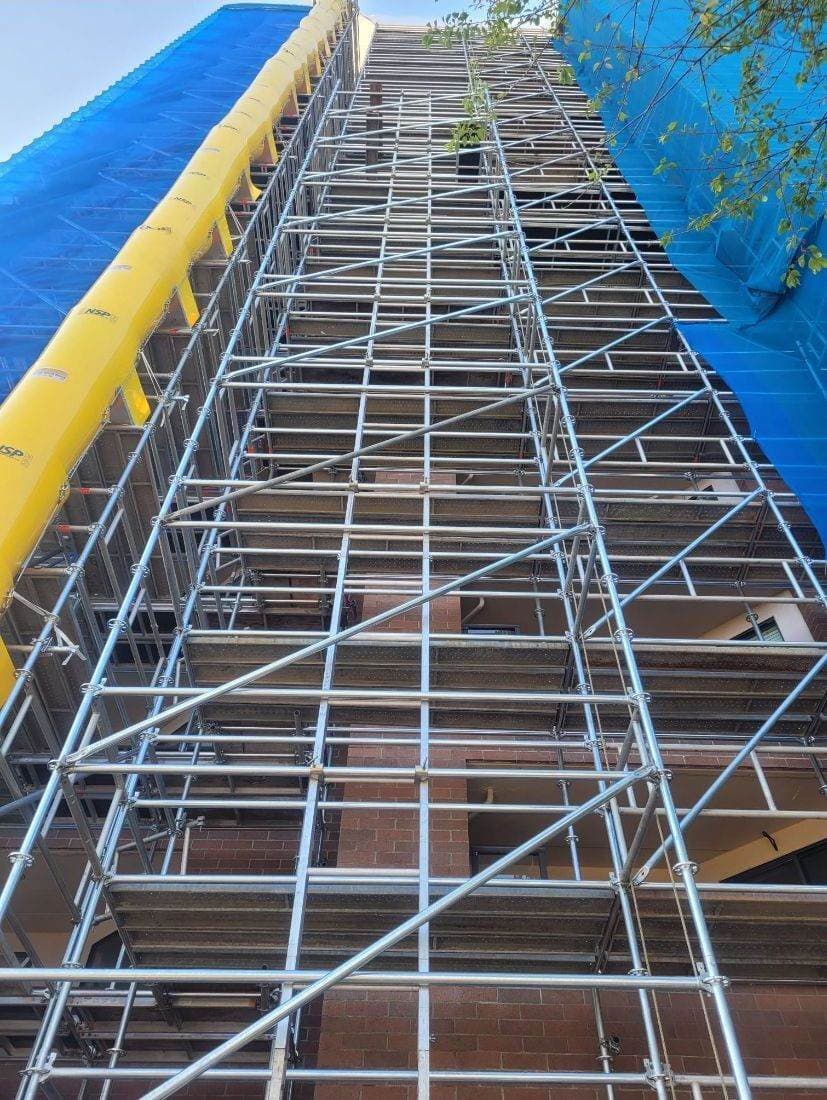
The rough rule we work to: any job above four floors with an active demo scope should have a chute planned from day one. Not added later when someone realises the hoist is the bottleneck. Planned. On the drawing. Attached to the scaffold, not bolted on as an afterthought.
Placement decisions belong on the scaffold drawings
This is where projects most often lose money on debris handling: the chute goes up after the scaffold is set. Now you’re moving guardrails, cutting extra openings, and either leaning the chute off the scaffold in a way that puts sideloads on it or building a separate tower. Neither is cheap.
Placement questions we work through with the GC before erection:
Which side of the building? The chute goes on the side where the bin can sit without blocking site access or a sidewalk. On tight downtown Vancouver footprints that constrains everything downstream, from bin size to swap frequency to delivery times.
How many chutes? One is usually enough on a mid-rise. On a full envelope job over 12 floors we’ll often plan two so demo can happen on opposite ends without the labourers walking half a floor to feed a single opening. Two chutes also lets you drop wet and dry waste separately if the tip fees justify it.
What floors feed it? Every third floor is a common pattern, with intermediate floors feeding through gathering points. You don’t want a feed door on every floor because most of them will sit unused and every door is a fall risk if it isn’t tagged and inspected.
Where does it terminate? The bin below the chute has to be covered, on a stable base, positioned so the debris doesn’t ricochet out of the top. On a tight Surrey job last year the bin was two feet off centre and the first day’s tear-off had drywall dust and screws on a parked car across the street. That’s a claim nobody wants to explain.
Get the chute into the scaffold shop drawings and the whole thing runs cheaper.
Bin logistics: the part GCs underestimate
The chute is only half the system. The bin at the bottom, the swap schedule, and the haul route decide whether the site actually runs clean.
Standard 20-yard roll-off bins fill fast on a demo floor. On a 16-storey envelope tear-off we’ve seen a bin fill in under two hours during peak strip-out. If your hauler needs 24 hours’ notice and you’re on a two-hour cycle, you’re going to run over-full, block the chute, and shut down demo. That’s a real thing that happens.
Options that work on Metro Vancouver commercial jobs:
- Two-bin rotation: one under the chute, one on standby a few feet away. Hauler cycles them so demo never sees an empty landing zone.
- Small covered bins for tight sites: less capacity per swap, more swaps, but they physically fit in New Westminster and East Vancouver footprints where a 20-yard barely lands.
- Segregated bins for tip credits: clean wood, metal, and mixed C&D separated at grade. On a large teardown the credits can offset the swap cost.
Where you lose money: agreeing on a bin schedule with the hauler before you talk to the demo lead. The demo lead knows how fast the material is coming off. Get them in the same conversation.
Noise, dust, neighbour complaints
A rubbish chute is loud. Metal-panel sections banging into each other at three or four floors an impact, and that carries. On tight urban sites in Burnaby, Coquitlam, and downtown Vancouver you will get calls. Sometimes on day one.
Ways we’ve kept complaints under control:
Sound-dampened chute sections (rubber-lined panels) knock 10–15 dB off the peak. Not silent, but the difference between a neighbour complaint and a neighbour who just closes their window. Higher rental cost, worth it on residential-adjacent jobs.
Dust suppression at the bin. Debris falling 10 storeys creates a mushroom cloud of dust every time it lands. A misting nozzle at the top of the bin, or a tarped bin lid with a small feed opening, holds most of it in.
Working hour windows. City of Vancouver noise bylaws run roughly 7:30 a.m. to 8 p.m. weekdays and shorter windows on Saturday, with construction restricted on Sunday. Burnaby, Surrey, and Richmond each have their own rules. Check before scheduling. Strata sites often add tighter restrictions in the notices.
Advance notice to neighbours. On strata restoration work the letter to residents should mention debris handling and expected chute activity. Property managers who get ahead of this take fewer angry calls.
What the GC or PM should prepare before installation
Straightforward preparation list. Do these and the chute install takes hours instead of days:
Site access confirmed for equipment delivery. The chute sections come on a flatbed. You need somewhere to stage them, or delivery windows short enough to lift straight into place.
Bin position confirmed with the GC, hauler, and municipality. If the bin sits on the sidewalk you need a street-use permit. City of Vancouver, Burnaby, and Surrey each have their own process and lead times.
Feed openings decided. Which floors, which side, which times of day. This drives how many openings we cut and tag.
Strata or property manager notified. Envelope work on a strata building typically requires a formal notice period. Residents on balconies below a chute-side floor will need to be told to keep balcony doors closed during demo.
Hoist schedule adjusted. Once the chute is up, the hoist plan changes. Personnel and material runs replace debris runs. Sync with the site super.
Fall protection at feed openings tagged. Every chute opening is a live edge until it’s tagged, inspected, and the guard sequence is trained on. That’s not a paperwork item, it’s a Part 13 requirement.
WorkSafeBC and CSA context
Debris chutes fall under WorkSafeBC’s OHS Regulation Part 13 (Ladders, Scaffolds and Temporary Work Platforms) and Part 20 (Construction, Excavation and Demolition). The specifics that get flagged on inspection:
Chute openings on active floors have to be guarded when not in active use. Full guardrails, self-closing gates, or covers, whatever the site standard is, it has to be there and it has to close.
Ties into the scaffold structure need engineering. A vertical chute exerts lateral loads on whatever’s holding it. If it’s slung off the scaffold, that scaffold needs to be designed for the added load. That’s the case for planning together, not tacking on later.
Bins at the bottom must be positioned and covered so debris doesn’t ricochet, so pedestrians can’t wander under the drop zone, and so the chute base is stable. On public-facing sites you’ll usually see hoarding, signage, and a spotter during active demo.
Qualified labourers on the feed side. Whoever’s pushing debris into a chute opening needs training on the specific system, the guards, and the shut-down procedure if something goes wrong. This isn’t a labourer-of-opportunity task.
CSA standards apply to the chute components themselves. The couplings, the anchoring, the impact ratings. A CSA-certified chute installed to Part 13 specs takes this whole liability off the GC’s project file.
Where jobs lose money on debris
Three failure modes we see over and over:
Chute added mid-project. Scaffold’s up, demo’s underway, hoist is jammed, and someone calls to rent a chute for next week. Now you’re paying for retrofit engineering, cutting openings, and losing a day rearranging trades. Plan it in.
Bin too small for the demo rate. The chute works fine, the bin fills in an hour, the hauler comes on the next day’s schedule, and demo shuts down. Match bin capacity to the strip-out rate, not the average.
No noise or dust plan. Complaints get elevated to a bylaw officer, work gets a stop-order, and half a day disappears while you sort it out. On strata jobs the property manager takes the political hit and the GC pays for it in extended weeks.
Every one of these is preventable in the planning meeting.
Garbage chute planning across the Lower Mainland
We install and service debris chute systems on multi-storey commercial and high-rise residential jobs across the region: Delta, Surrey, Burnaby, Richmond, Vancouver, New Westminster, Coquitlam, Maple Ridge, Langley. Each municipality has its own noise and street-use rules, and the site footprints in older parts of New West and East Van are very different from a green-field commercial pad in Langley. Planning the chute against the actual constraints of the site is what keeps the schedule intact.
Chute moves and extra hoppers get handled while the job runs, not renegotiated as a change order. Everything we install is CSA-standard equipment set to WorkSafeBC Part 13 requirements, on a fully insured install crew.
Getting the chute planned in
Debris chutes look like a small line item. On a multi-storey job they decide whether the schedule holds or slips two weeks. If you’re planning a teardown, envelope refit, or high-rise reno in Metro Vancouver and want the chute planned into the scaffold from day one, get a quote through our estimate form or call (778) 375-5349. Tell us the debris type and the floors it comes from and we will size the chute and the ties for it.
Frequently asked questions
When should a construction job plan a debris chute?
The rough rule: any job above four floors with an active demo scope should have a chute planned from day one. Manual removal dies past floor four, and a hoist buried in debris runs stops moving trades and material. The chute belongs on the scaffold drawings, attached to the scaffold, not bolted on later when someone realises the hoist is the bottleneck.
How many chutes does a building need, and which floors feed them?
One is usually enough on a mid-rise. On a full envelope job over 12 floors, two are often planned so demo can run at opposite ends, and two chutes also let wet and dry waste drop separately. Feeding from every third floor is a common pattern, with intermediate floors using gathering points, because every unused feed door is a fall risk.
How do you keep chute noise and dust under control?
Sound-dampened, rubber-lined chute sections knock 10 to 15 dB off the peak. Not silent, but enough to turn a complaint into a closed window. A misting nozzle at the top of the bin, or a tarped lid with a small feed opening, holds most of the dust in. Working inside local noise bylaw hours and giving neighbours advance notice helps too.
What WorkSafeBC rules apply to debris chutes?
Debris chutes fall under Part 13 and Part 20 of the OHS Regulation. Openings on active floors must be guarded when not in use. Ties into the scaffold need engineering for the lateral load. The bin must be covered and placed so debris can’t ricochet and pedestrians stay out of the drop zone. Labourers feeding the chute need training on that specific system.