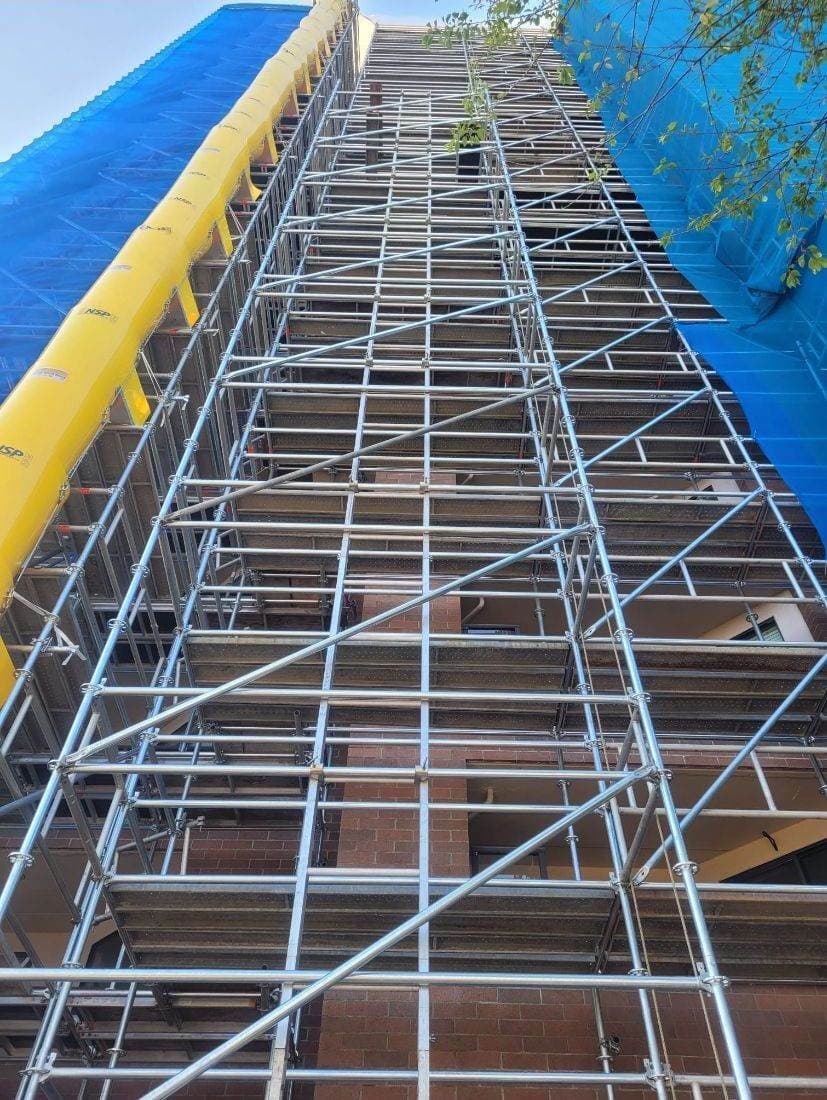
Walk onto almost any commercial site in Metro Vancouver and you’ll find a piece of card zip-tied to the scaffold at the access ladder. Green, yellow or red. Supers look at it a dozen times a day. Most of them read the colour and keep walking.
That’s the problem. A scaffold tag inspection in BC produces a dated, signed statement from one qualified person about one scaffold as it stood when they walked it. It isn’t a permanent rating. It doesn’t follow the scaffold through the week. And it says a lot less than most people on site assume.
Here’s what the tag actually certifies, what quietly voids it, and who should own it on your job.
The tag is a dated statement
A properly filled-out tag carries a handful of things. The scaffold’s location or ID. The date of the last inspection. The name and signature of the person who did it. The duty rating the scaffold was built to. On a yellow tag, the restrictions in writing. Many tags also carry the date the next inspection is due.
Every one of those fields matters, but the date matters most. The inspector is telling you that on this day they walked this scaffold, and as built it was fit for use within this rating. Nothing on the card speaks to what happened after they climbed down.
A tag with blank fields is a tag nobody should trust. A green card with no name and no date is just a green card.
Green, yellow, red: what each one tells a worker
The three colours are the convention on BC sites.
Green means inspected, complete and safe for use within its rating. It doesn’t excuse anyone from a look before they climb. If a plank is missing or a guardrail is down, believe the scaffold, not the card.
Yellow means the scaffold can be used, but only under conditions written on the tag. The common one is a guardrail section removed at a loading point, so anyone working near the opening has to be tied off. Others restrict the load, or limit a section to a particular task. A yellow tag with no restriction written on it is incomplete, and incomplete means nobody should be on it.
Red means stay off. The scaffold is going up, coming down, being altered, or has failed inspection. Only the scaffold crew working on it belongs on a red-tagged section.
The trap is that yellow gets treated like a softer green. It isn’t. A yellow tag puts a specific obligation on every person who climbs, and if they don’t read it, they don’t know what that obligation is.
Who is allowed to sign it
BC’s Occupational Health and Safety Regulation talks about a "qualified" person: someone who knows the work, the hazards involved and how to control them, through education, training, experience or some mix of the three. Part 13 of the Regulation covers ladders, scaffolds and temporary work platforms, and that’s the frame scaffold inspections sit in. CSA standards for access scaffolding fill in much of the practical detail.
On a full-service job, the qualified person is usually the scaffold contractor’s own foreman or inspector. They built it, they know the design, and they keep coming back to it.
On a supply-only arrangement it gets murky fast. Who walks the scaffold in week three? If the contract doesn’t name someone, the answer by default tends to be the GC, whether or not the GC has a scaffold-qualified person on staff.
One practical test: if the person who signed the tag left the project three weeks ago, the tag is evidence of nothing current.
How often the tag gets re-inspected
The cycle we work to under Part 13 is the one most commercial sites run: inspection before first use, at least weekly while the scaffold is in use, and again after anything that could have changed it. That last category is wider than people think. An alteration by any trade. A wind storm. Heavy rain that softens the ground. A forklift backing into a standard. A crane load swinging into the face.
Metro Vancouver supplies plenty of the weather kind from October through March. On the Fraser delta, in Richmond and much of Delta, the ground under base plates and mudsills can settle after a few days of heavy rain, and a scaffold that was plumb last Tuesday may not be now. After a big blow, the ties and bracing on the windward face get a second look. None of that shows on a tag dated before the storm.
Each inspection goes into a written log kept on site. The tag shows the last inspection. The log shows the history, and it’s the first thing anyone asks for when something goes wrong.
What the tag does not certify
Anything that changed after the inspector left
A trade pulls a mid-rail to pass material in through a window. Someone lifts a plank to run a hose. A tie gets unhooked because it’s in the way of a cladding panel. The green tag stays exactly where it was, and from that moment it’s describing a scaffold that no longer exists.
Modifications belong to the scaffold crew. When a trade does them on its own, the inspection is void for that section, whether anyone admits it or not.
Loads it was never rated for
The inspector certified the build against its duty rating. They didn’t certify your material plan. A light-duty platform stacked with pallets of stone veneer or bags of stucco is overloaded no matter what colour the card is. If the job needs material staged on the scaffold, tell your scaffold contractor before it goes up, so the design and the rating match the plan.
Anything added later
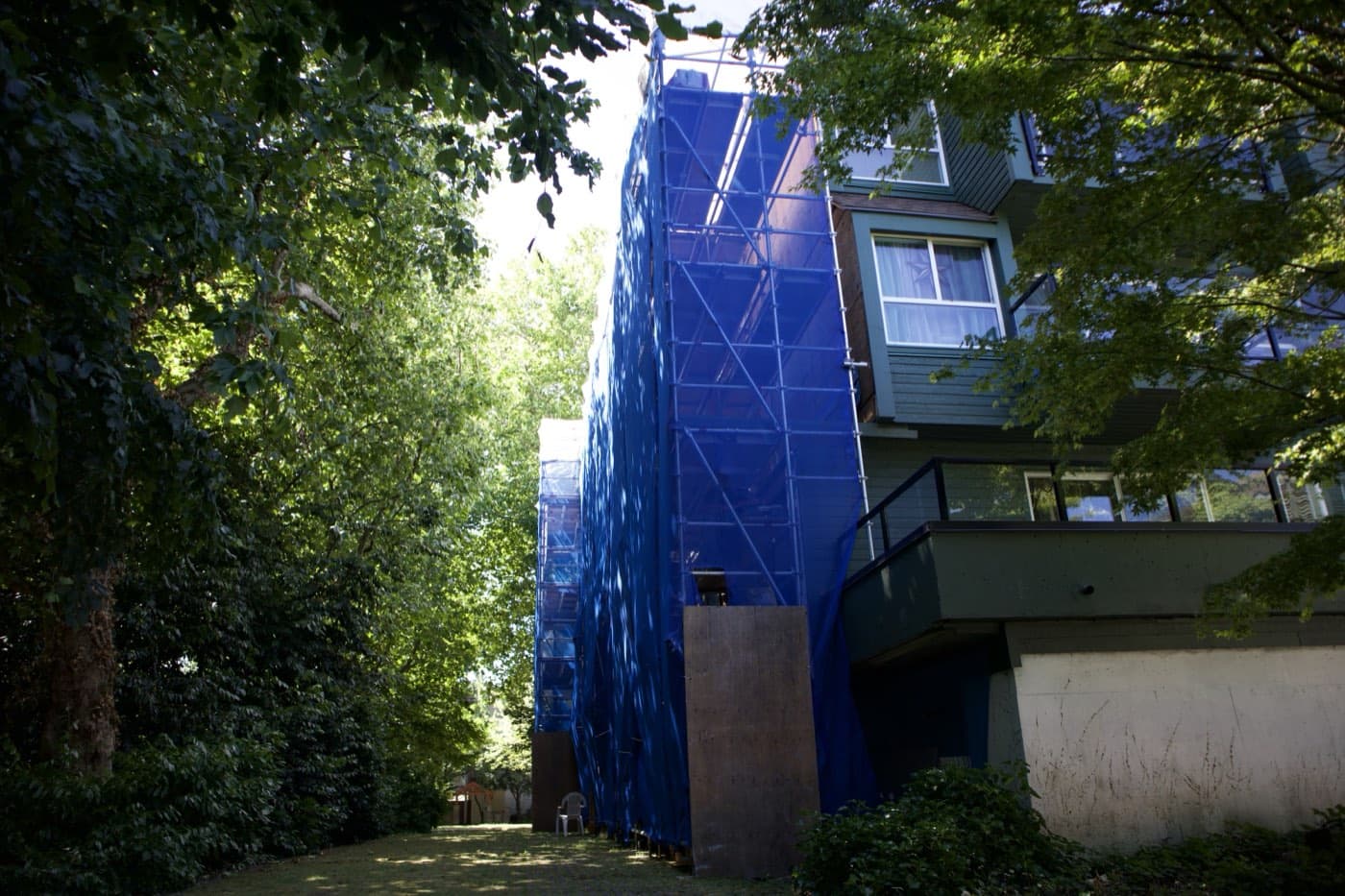
Shrink wrap, debris netting, banners, a garbage chute, a material hoist tied into the frame. Every one of them changes the loads on ties, bracing and bases. Shrink wrap is the big one. A fully wrapped scaffold catches wind like a sail, and the tie pattern that suited an open frame may not suit a wrapped one. Additions like these typically need a design check before they go on and a fresh inspection once they’re installed.
The ground
The inspector looked at sills and base plates as they were. If another trade excavates beside the footing line, or water undermines a sill, the foundation the tag assumed is gone.
The design
On engineered scaffolds, the stamped drawing is the design, and the tag confirms the as-built matched it on the day. If the scaffold has drifted away from the drawing, a fresh green card doesn’t bring it back. The drawing gets followed, or the engineer revises it.
The worker
A tag doesn’t qualify the person standing on the platform. A yellow tag that calls for tie-off assumes the worker has a harness, a suitable anchor and the training to use them. The card can’t check any of that. The employer has to.
What an officer compares
A WorkSafeBC officer on a site walk doesn’t read the tag the way a tired crew does. They compare it to the scaffold in front of them. Is the date current? Does the colour match what they can see, or is there a green tag on a bay with a missing toe board? Is there a log behind the tag, and can somebody produce the person who signed it?
A mismatch between tag and scaffold is about the easiest thing on a site to spot, and officers can order an unsafe scaffold out of use until it’s fixed. We covered the wider list of what supers get flagged for in our post on WorkSafeBC scaffolding requirements.
A pattern we see on envelope jobs
Picture a five-storey wood-frame job in Surrey, with cladding going on from the scaffold. Friday afternoon, the panel crew pulls two guardrail sections on level three to feed panels in through the openings. They mean to put them back. They don’t.
Monday, a different crew arrives early, sees a green tag at the base ladder, and climbs. Nobody re-tagged. Nobody called the scaffold contractor. The card at the bottom is still describing Thursday’s scaffold.
Usually nothing happens. Sometimes an officer walks the site that morning. Rarely, someone steps backwards through the gap. Either of the last two can shut a face down, and the gap on level three ends up costing far more than the phone call that would have prevented it.
The fix is boring. Trades that need a modification call the scaffold crew. The crew makes the change properly, either a loading bay with gates or a yellow tag with the restriction written on it, and the log gets updated.
Questions to settle before the first tag goes up
If you’re the GC or PM, get these answered in writing before first use:
- Who is the qualified person doing inspections, and how often will they be on site?
- Where is the inspection log kept, and who can see it?
- What happens when a trade needs a guardrail, plank or tie moved?
- What duty rating is each section built to, and does that match where material will be staged?
- Are shrink wrap, a chute or a hoist planned, and has the design accounted for them?
- Who re-inspects after a storm, and how do you hear about it?
None of these are hard questions. They just tend to get asked after the first stop-use order instead of before.
What the inspection cycle costs
Inspections aren’t free. Someone qualified has to walk the scaffold every week for the life of the job, and come back each time a trade needs a change. On a full-service contract that cost is priced in with install and dismantle. On a supply-only deal it typically isn’t, and it shows up later as GC staff time or as an order nobody planned for.
The factors that move it: how long the scaffold stands, how much of the building it covers, how often trades need alterations, and how exposed the site is to weather. Any figure before a site visit is a placeholder, and real pricing is subject to site assessment.
Tags and inspections with A&K
On A&K jobs the tag belongs to us. Install, the weekly inspection cycle, re-tagging after alterations and weather, and dismantle all sit under one contract, alongside shoring, shrink wrap, hoists, debris chutes and engineering when the job calls for them. Crews work to WorkSafeBC Part 13 requirements and CSA standards and are fully insured, operating out of Delta and across Vancouver, Surrey, Burnaby, Richmond, Coquitlam, New Westminster, Langley and Maple Ridge. That includes commercial, high-rise and occupied sites such as hospitals and government buildings.
If you’re planning a job and want the inspection side settled before the first section goes up, call (778) 375-5349 or request an estimate. We come back with a number in 1 to 3 business days. The full list of services under one contract is on the main site.
Frequently asked questions
What does a green scaffold tag actually certify?
A green tag certifies that a qualified person inspected the scaffold on the date written on the card and found it complete and safe for use within its duty rating. It speaks only to the scaffold as it stood at that moment. Any change made after the inspector climbed down, from a removed guardrail to a lifted plank or added shrink wrap, is not covered until the scaffold is inspected and tagged again.
What is the difference between a yellow and a red scaffold tag?
A yellow tag means the scaffold can be used, but only under the restrictions written on the tag, such as tying off near a guardrail removed at a loading point. A red tag means nobody uses it except the scaffold crew, because it is being erected, altered or dismantled, or has failed inspection. A yellow tag with no written restriction is incomplete and should be treated as unusable.
How often does a scaffold need to be re-inspected in BC?
On commercial sites the usual cycle under Part 13 of the OHS Regulation is inspection before first use, at least weekly while the scaffold is in use, and again after anything that could have changed it. That includes alterations by any trade, wind storms, heavy rain that softens the ground under base plates, and impacts from equipment. Each inspection should be recorded in a log kept on site.
Who is responsible for scaffold tags on a construction site?
Whoever the contract names, and if it names nobody, the responsibility tends to land on the GC. On a full-service contract the scaffold contractor’s qualified person runs the inspections and keeps the tags current. On a supply-only arrangement that work typically falls to the GC, whether or not they have a scaffold-qualified person on staff. Settle it in writing before first use.