The last shift before Christmas tends to end early. Trades pack up by noon, someone locks the gate, and the scaffold stands on its own for the next two or three weeks, through some of the wettest and windiest weather the Lower Mainland gets all year. Nobody walks it. Nobody reads the forecast for it. Then on the first Monday in January, every trade on the job shows up expecting to climb.
A scaffolding holiday shutdown is a short job with a long tail. Done in the last week before the break, it costs a few hours of a crew’s time and a walk with the super. Skipped, it shows up in January as torn wrap, water behind the cladding, a sill that has settled, and a restart morning spent waiting on an inspection nobody booked.
This guide is for GCs, project managers and strata managers closing a site with scaffold still standing this December.
What December does to an unattended scaffold
Pacific storms bring heavy rain and southeast winds through the holiday break most years. A cold snap can follow, with Arctic outflow pushing west out of the Fraser Valley, felt first in Langley and Maple Ridge, and anything left wet freezes. Higher sites on Burnaby Mountain or up in Coquitlam can be clearing snow while downtown Vancouver only gets rain.
In a normal week, the weekly inspection catches a sill that has started to sink or a seam in the wrap that is opening up. Over the break those problems stack up with nobody looking, and they all get found on the same morning.
Most of the damage comes from three directions: wind on wrapped faces and loose material, water at the base line, and people getting onto a scaffold they have no business on.
Before you close: the scaffold checklist
Book the shutdown walk for a few days before the break, with the scaffold crew and the site super on it together. Left to the final afternoon, it gets rushed or skipped.
Clear the decks
Every board, bag, bucket and offcut comes off the platforms. Wind lifts plywood sheets and loose insulation and drops them on the street or a neighbour’s roof. Rain soaks bags of stucco and mortar until they weigh well over what they did when they were staged, so a platform built to one duty rating can end up carrying more than anyone planned for. Anything of value left at height is also easy to take from a scaffold that nobody is watching.
So do the "for now" fixes: a spare plank across a gap, a ladder lashed to a standard, a tarp tied to a guardrail. If the scaffold crew didn’t put it there, it comes down or gets done properly before the gate closes.
Walk every tie
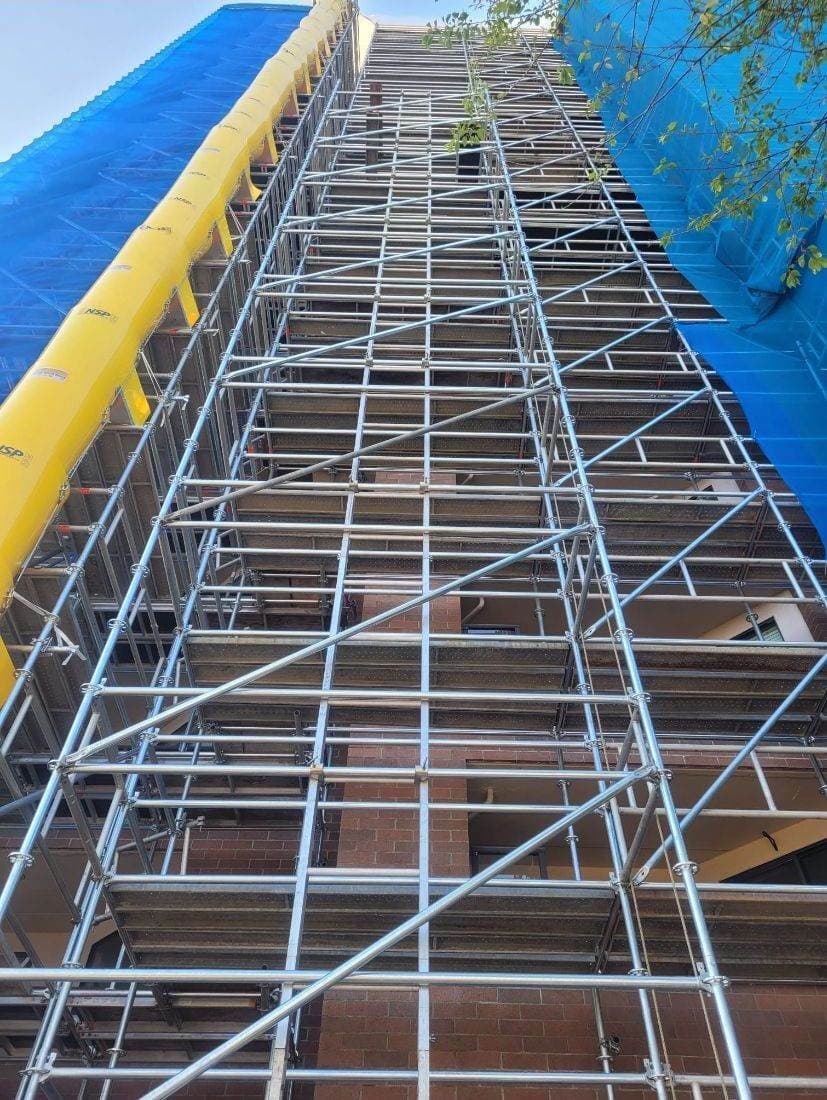
Ties hold the scaffold to the building when the wind pulls on it. December is when envelope trades push hardest to finish an elevation before the break, and that is when ties get moved to reach a window or a wall section. Walk every level and check each tie against the drawing or the recorded tie layout. A missing tie gets reinstated by the scaffold crew before close. Writing it down for January leaves the scaffold short a tie through the whole storm season.
Wrapped scaffolds need the closest look, because the wrap turns the whole face into one surface for the wind to push and pull on. Our guide to winter scaffolding in BC explains how that changes the tie pattern.
Close up the wrap
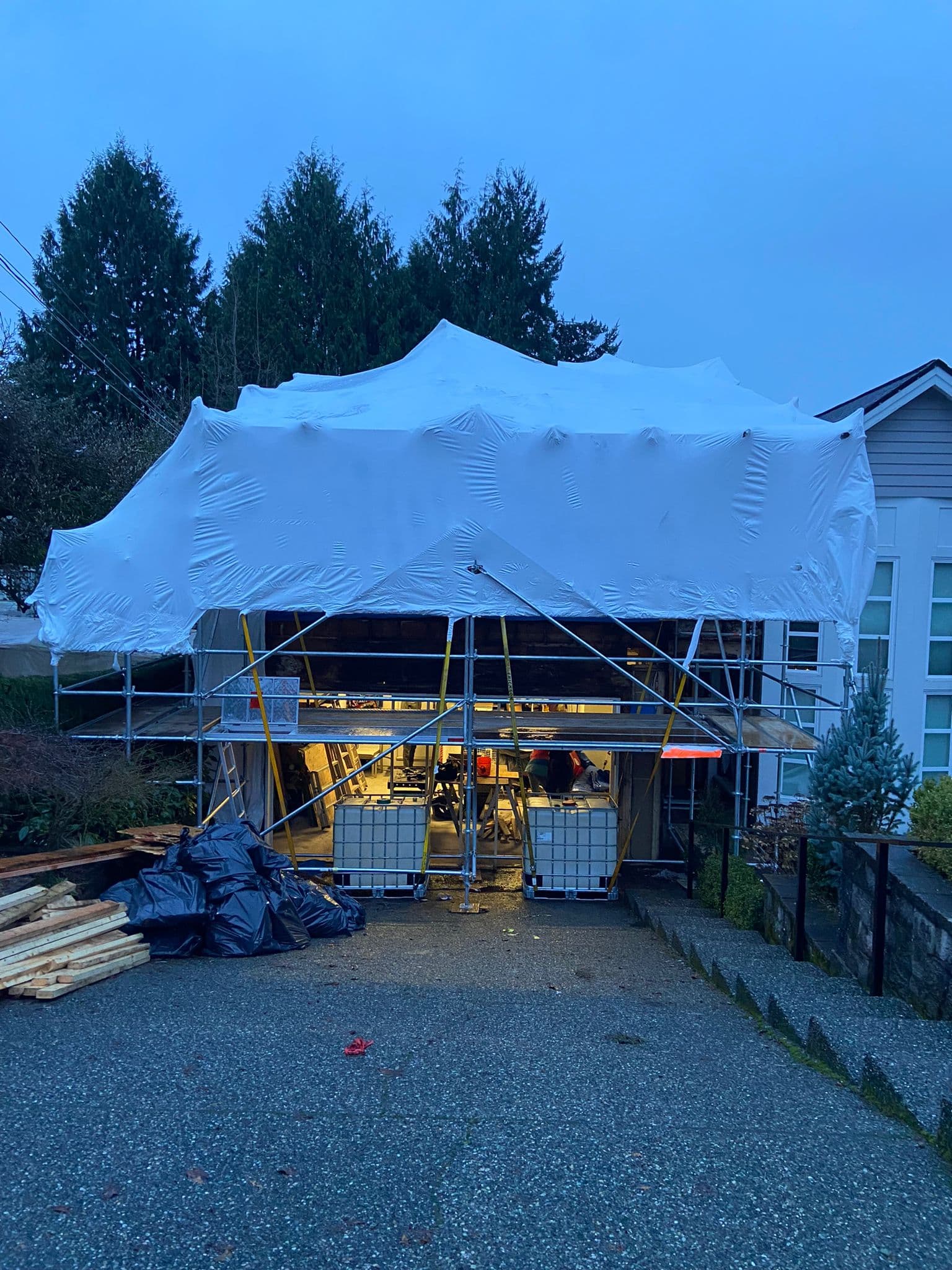
Check the shrink wrap from inside and out. Torn panels, loose corner seams and open access flaps are what the first storm of the break finds. Secure every flap and repair tears now, since a small tear that opens up on December 27 can let a week of rain onto sheathing or insulation that went in during the pre-holiday push.
The heaters need a decision as well. Fuel-fired heaters in a closed enclosure produce carbon monoxide, and polyethylene burns. Unless the site has a heating and fire watch plan with someone carrying it out over the break, we’d take the heaters out of the enclosure before the site closes. If the GC needs heat to protect finished work, that plan goes in writing with the name of whoever is monitoring it.
Deal with water at the base
This is the check that gets missed most often. During envelope or roofing work, gutters and downpipes are often disconnected, and a wrapped face sheds its rain straight down to the base line. Two weeks of that softens the ground under the sills, most of all on the low, wet ground of Richmond and Delta.
Before the break, route roof water and runoff away from the sills and clear debris from nearby drains. Check base plates, sills and screw jacks, and record their condition so the January inspection has something to compare against. An open trench near the footing line gets backfilled or barricaded.
Close the access
An empty site with a scaffold on it is a ladder to every upper floor. On an occupied strata building, it is also a ladder to every balcony while some of the residents are away for the holidays.
Lock the stair tower gates, remove or barricade the lower ladder sections, and make sure site fencing and signage are intact. Our advice is to red-tag the access points for the break, so nobody reads a December green tag as permission to climb in January. Treat any tag dated before the shutdown as expired until a qualified person has walked the scaffold again.
Chutes, hoists and shoring
An open debris chute collects rain and other people’s garbage. Close or cap the hoppers on the upper floors and get the bin at the bottom emptied before the break, because a full bin sitting in the rain gets heavier and draws dumping. Material hoists get parked and secured following the manufacturer’s instructions and the hoist contractor’s procedure.
If temporary shoring is holding up a slab, beam or wall over the break, give it the same walk as the scaffold. Shores stand on the same wet ground, and a paused renovation still puts its full load on them.
Who watches the site while it’s shut
Locking the gate leaves the scaffold standing, and somebody is still responsible for it. Before the break, settle in writing:
- Who the site contact is during the shutdown, and who holds the keys
- Who watches the forecast, and what happens when Environment and Climate Change Canada issues a wind warning for Metro Vancouver
- Who can approve a repair if wrap tears or something comes loose
- How a neighbour, a strata council or a security company reports a problem
That last one gets overlooked. On an occupied building in Burnaby, residents will spot a flapping panel of wrap long before anyone on the project team does, and a number on the hoarding that goes to an unchecked voicemail means the problem waits until January.
On a full-service contract, the scaffold contractor belongs on that list for wrap and tie repairs. On a supply-only deal, check whether anyone at all is responsible for the scaffold between the last shift and the first.
Coming back: the restart inspection
The cycle we work to under Part 13 of the OHS Regulation is inspection before first use, at least weekly while the scaffold is in use, and again after anything that could have changed it. Two or three weeks of December weather on an unattended site falls squarely in that last category. Nobody climbs until a qualified person has walked the scaffold, logged the inspection and re-tagged it.
The order we walk it in on restart:
- The base first. Sills, base plates and screw jacks, looking for settlement, washout, and anything that heaved and dropped through a freeze and a thaw.
- Ties and bracing, level by level, against the layout recorded at shutdown.
- Decks and guardrails: frost or ice on a cold morning, debris blown in, any plank or rail that has moved.
- The wrap, the chute and the hoist, inside and out.
- Anything changed by a trade that came back early to finish one thing over the break.
Where a section needs work, the scaffold crew does it and that section stays red until it is re-inspected. The rest of the scaffold goes back into use once it is tagged.
Book it for before the crews arrive
The site reopens on a Monday, every trade is at the gate at seven, and the scaffold inspection starts at the same moment. Crews stand around for the morning, or someone climbs anyway.
Book the restart inspection for the day before the site reopens, or early enough on the first morning that the scaffold is tagged before the first crew walks in. If the inspection turns up a repair, that leaves time to make it.
Where a shutdown ends up costing money
Most January losses we hear about come from wrap torn in a late-December storm and found weeks later, settled sills that need re-levelling before a bay can be used, ties moved before the break and never reinstated, and a restart day lost to an inspection nobody booked. Each is cheaper to deal with the week before Christmas.
Picture a six-storey strata building in New Westminster, partway through envelope remediation, with two elevations wrapped and residents living in it. A storm comes through between Christmas and New Year, a corner seam lets go, and the panel tears wider with every gust. Residents call the strata manager, who calls the GC’s office, which is closed. By the time the site reopens, rain has been getting behind the sheathing for more than a week. Secured seams and a contact number someone checks over the break would have cost an afternoon in December.
How A&K handles the shutdown and the restart
On A&K jobs, the shutdown walk and the restart inspection sit in the same contract as install and dismantle, along with shrink wrap, debris chutes, hoists, shoring and engineering when the job needs them. Crews work to WorkSafeBC Part 13 requirements and CSA standards and are fully insured. We work out of Delta across Metro Vancouver, from Surrey and Langley to Coquitlam and Maple Ridge, including hospitals and government buildings that stay open while the work stops.
Our recommendation: put the shutdown walk and the restart inspection in the schedule now, as two dated line items with a named person on each.
Planning exterior work through the holidays or into the new year?
Call (778) 375-5349 or request a free estimate for your site, and we’ll come back with a number in 1 to 3 business days, with install timing subject to site assessment. The full list of services under one contract, from shoring to debris chutes, is on the main site.
Frequently asked questions
What should be done to scaffolding before a holiday shutdown?
Clear every platform of material, tools and loose items, then walk every tie against the recorded layout and reinstate any that were moved. Repair tears and secure the flaps in the shrink wrap, route runoff away from the sills, and close off the access points. Cap the debris chute and empty the bin. Agree in writing who watches the site and who can approve a repair to wrap or ties during the break.
Does scaffolding need to be inspected after the holiday break?
Yes. The cycle A&K works to under Part 13 is inspection before first use, at least weekly while in use, and again after anything that could have changed the scaffold. Two or three weeks of December weather on an unattended site counts. Nobody should climb until a qualified person has walked the scaffold, logged the inspection and re-tagged it, and any tag dated before the shutdown should be treated as expired.
Should heaters stay on inside shrink wrap during the shutdown?
In most cases, no. Fuel-fired heaters in a closed enclosure produce carbon monoxide, and polyethylene wrap burns. Unless the site has a heating and fire watch plan with someone carrying it out over the break, take the heaters out of the enclosure before the site closes. If heat is needed to protect finished work, put that plan in writing with the name of whoever is monitoring it.
When should the restart inspection be booked?
Before the trades come back. If the inspection starts at the same moment every crew arrives at the gate, the first morning is lost, or someone climbs anyway. Book it for the day before the site reopens, or early enough on the first morning that the scaffold is tagged before the first crew walks in. That leaves time for the scaffold crew to make any repair the inspection turns up.