Every scaffold on a Metro Vancouver commercial site can look right from twenty feet away and still fail an inspection at ten. The tag might be missing. A base plate might be sitting on wet plywood instead of a mud sill. A midrail could be swapped out for a rope after the last crew rebuilt one bay.
WorkSafeBC officers see all of it in a walk, and they know exactly which items point to a scaffold that was never handed over properly. The WorkSafeBC scaffolding requirements sit under Part 13 of the Occupational Health and Safety Regulation, and the flags land on items site supers can actually check before an officer does.
If you super commercial or high-rise work, the kind that runs weeks or months and cycles trades across every level, you already know a red tag on your scaffold shuts trades down until the flag clears. That downtime lands on your schedule, not the scaffolder’s.
This is the honest version of what WorkSafeBC looks at, what supers get flagged on, and where a professional scaffold contractor takes the exposure off your name.
The regulation that governs scaffolds in BC
Scaffolds in British Columbia are covered under Part 13 of the Occupational Health and Safety Regulation, along with the general fall-protection rules under Part 11. Part 13 sits inside the Workers Compensation Act, which means every requirement is enforceable. An officer flagging your site is issuing a legal order, not a suggestion.
Part 13 covers erection, inspection, use, alteration, and dismantling. Part 11 sets the fall-protection threshold at three metres above a lower level, which is the working height where a guardrail or personal fall-arrest system becomes non-negotiable. WorkSafeBC also references CSA standards for equipment quality. The tubes, couplers, planks, and system components you rent should carry markings that trace back to a recognized manufacturer.
Officers don’t quiz supers on section numbers. They walk the scaffold, and they look at a handful of specific things.
The tag on the scaffold
The scaffold tag is where an officer starts. On a compliant site you see a card at the access ladder or the base of every access bay, filled out, dated, and signed by a qualified person.
- Green tag: inspected, safe for use.
- Yellow tag: restricted use. Something needs a workaround, most often supplemental fall arrest for gaps in guardrail while a leading edge is being built.
- Red tag: do not use. Something is wrong that must be corrected before anyone climbs on it.
Missing tags are the fastest flag. Same with a green tag that hasn’t been reviewed after a modification. On a job where finishers move guardrail sections to run their work, the scaffold changes shape almost daily, and if nobody re-tags after each change, you’re a walk-around away from a stop-work order.
The rule under Part 13 is straightforward. Scaffolds must be inspected by a qualified person before first use, at least weekly during use, and after any alteration, weather event, or accident that could affect the structure. On long jobs, an eight-week envelope job in Burnaby, a strata restoration in Coquitlam that runs into winter, that means somebody with the ticket walks the scaffold every week, signs the log, and re-tags anything that changed.
If your scaffold contractor doesn’t send that person out, the responsibility drifts to your foreman. Most GCs don’t want that liability sitting on the wrong shoulders.
Guardrails, midrails, and toeboards
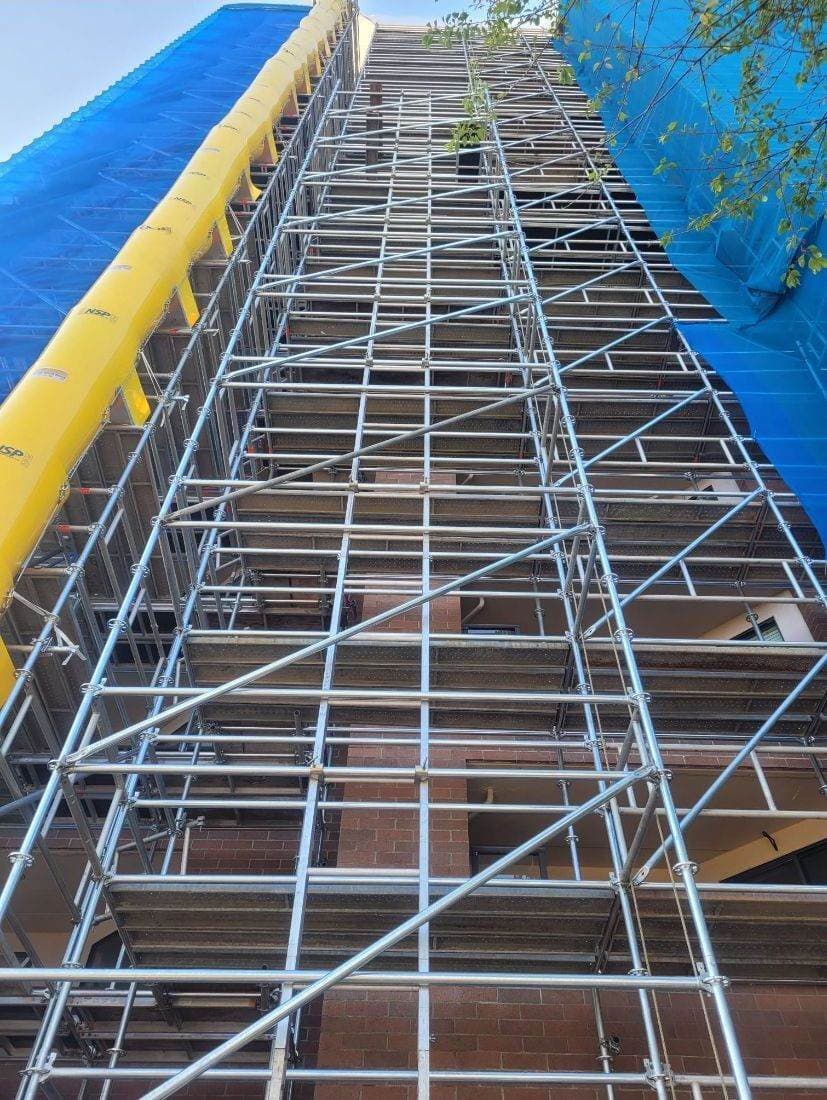
The most common physical flag on a commercial scaffold is guardrail geometry. WorkSafeBC specifies a top rail, a midrail, and a toeboard on any working platform where a fall of three metres or more is possible. Contractors get flagged when:
- A midrail is missing on one bay because a load was hoisted through and never reinstalled.
- Toeboards are gapped at the corners, and there’s material on the deck that can slide.
- The top rail is at the wrong height, either too low to be a rail or too high to work under.
- A rope or a strap has been tied in as a temporary replacement and nobody removed it once the platform went back into general use.
None of this is subtle to an officer, and none of it takes long to fix if a qualified erector is on call. Where it goes wrong on schedule-driven jobs is when a subtrade modifies the scaffold to fit their work, doesn’t tell the scaffolder, and the platform gets used again in that state.
Part of a professional install includes a written expectation that trades don’t touch the scaffold. When they need something changed, the scaffolder comes back and changes it. That’s a phone call, not a red tag.
Base plates, mud sills, and grade
Officers spend time at the bottom of the scaffold, not just the top. Common ground-level flags:
- Base plates set directly on soil, wet plywood, or an uneven surface.
- Screw jacks running out of thread because the grade wasn’t levelled properly.
- Mud sills, the timber pads that spread the load, that are too short, cracked, or missing.
- A frame sitting on aggregate that has washed out after a Fraser Valley rain event.
On Delta, Richmond, and South Vancouver sites where the water table is high and the working season includes real rain, base conditions change over the life of the job. A scaffold that sat correctly in August can settle by October if the mud sill wasn’t sized for the loads or the ground wasn’t graded before erection.
Weekly inspection catches this. If the crew installing your scaffold didn’t verify grade and didn’t size sills to the loads, week-four inspection catches nothing because there’s no record of what the baseline looked like.
Ties into the structure
Any scaffold above roughly the second lift needs to be tied into the building at intervals the erector’s design specifies. Officers check tie spacing, tie type, and whether ties are installed where the drawings show them.
Where ties get flagged:
- A tie skipped because it fell on a window opening and the crew didn’t detail an alternative.
- Ties that were removed by another trade to run their work and not reinstalled.
- Anchors into masonry that wasn’t structural, like brick veneer over insulation, drywall, or a soffit.
On high-rise strata restoration in New Westminster or Langley, tie details drive the whole install. A qualified erector plans them against the building’s structural drawings before the first frame comes off the truck. A rental-only supplier drops the material at the curb and leaves the tie strategy to the GC’s crew, which is where the flag risk enters the schedule.
Qualified erectors and the paper trail
WorkSafeBC expects scaffolds above certain heights and complexities to be erected under the supervision of a qualified person, and expects records of who did the work.
For most conventional and system scaffolds under standard loading conditions, that qualified person is a ticketed scaffolder. For heights or configurations that trigger engineered design, a Professional Engineer’s stamped drawing is required, and the erection has to match the drawing. Officers ask for the drawings, and they ask who installed to them.
Common paperwork flags:
- No inspection log on site.
- No copy of engineered drawings for a scaffold that needed them.
- No documentation of the tickets held by the erectors.
- Fall-protection training records missing for workers on the scaffold.
Fall-protection training is Part 11 territory, but it lands on the scaffold when workers using the platform aren’t trained to the standard the regulation requires. If the scaffold is compliant and the users aren’t trained, the flag still lands on the site.
Where the GC’s liability actually sits
A scaffold on your site is your workplace. Under the OHS Regulation, the prime contractor is responsible for coordination and safety on a multi-employer site, which is usually the GC. Subcontracting scaffold work to a supplier doesn’t move that responsibility off the GC’s name unless the scope, the drawings, the inspections, and the sign-offs are in writing and being executed.
What a professional scaffold contractor takes off the GC’s plate:
- Qualified erectors performing the install to CSA-standard equipment specs.
- Engineered drawings supplied where the scaffold’s height, configuration, or loading requires them.
- A weekly inspection cycle with a paper log kept on site.
- Same-day re-tagging when any trade modifies the scaffold.
- After-hours dispatch when an inspection catches something on a Friday and a Monday start depends on the fix.
That last point is why response time matters on jobs where a scaffold is on the critical path. A red tag stops three trades, not one. Whether that costs you an afternoon or a week comes down to how fast the contractor who owns the tag can get a crew back to the deficiency and re-tag it green.
What supers can check in a walk
Supers running commercial and mid-rise work in Vancouver, Surrey, Burnaby, and Maple Ridge don’t need to become scaffolders. A short walk before the trades load in each week catches most of what an officer would catch:
- Is there a tag? Is it green? Is the date within the last seven days?
- Guardrails, midrails, toeboards continuous around every working platform?
- Are base plates on adequate mud sills? Is the ground still level?
- Are ties in place at the intervals shown on drawings? Are they anchored to structure?
- Is there an inspection log on site, and is your scaffolder’s contact on it?
Any “no” is a call to the scaffold contractor before the next trade climbs on.
Working with a full-service contractor
A full-service scaffold contractor supplies the material, installs to design, provides the drawings, runs the inspection cycle, and returns for alterations across the life of the job. That’s the difference between renting scaffold and having scaffold that’s covered.
A&K Scaffolding runs its Metro Vancouver work from Delta and takes the compliance work on with the install. Weekly inspections, engineered drawings where the job needs them, ticketed erectors on every crew, tag maintenance, and crews across Vancouver, Burnaby, Surrey, Richmond, Coquitlam, New Westminster, Langley, and Maple Ridge. Installation, shoring, shrink wrap, hoist, chute and engineering under one contract, which is why compliance items don’t sit waiting for a second supplier to schedule.
For a project where WorkSafeBC compliance is on the critical path and you’d like the paperwork and the physical scaffold handled together, request an estimate or call (778) 375-5349 to walk the scope. A quick look at the full service list covers where scaffolding, shoring and engineering fit on a typical high-rise or commercial job.
Frequently asked questions
Which regulation covers scaffolds in BC?
Part 13 of WorkSafeBC’s Occupational Health and Safety Regulation covers erection, inspection, use, alteration and dismantling of scaffolds. Part 11 sets the fall-protection threshold at three metres above a lower level. The requirements are enforceable under the Workers Compensation Act, so an officer’s flag is a legal order, not a suggestion. WorkSafeBC also references CSA standards for equipment quality.
How often does a scaffold have to be inspected?
Under Part 13, a qualified person inspects the scaffold before first use, at least weekly during use, and after any alteration, weather event or accident that could affect the structure. On long jobs that means someone with the ticket walks the scaffold every week, signs the log and re-tags anything that changed. A green tag not reviewed after a modification is a fast flag.
What do green, yellow and red scaffold tags mean?
Green means inspected and safe for use. Yellow means restricted use: something needs a workaround, most often supplemental fall arrest for gaps in guardrail while a leading edge is built. Red means do not use until the problem is corrected. Tags sit at the access ladder or the base of every access bay, filled out, dated and signed by a qualified person.
What can a site super check before an officer walks the site?
A short weekly walk catches most of it. Is there a green tag dated within the last seven days? Are guardrails, midrails and toeboards continuous around every working platform? Are base plates on adequate mud sills, with the ground still level? Are ties in place at the intervals on the drawings? Is the inspection log on site? Any no means a call to the scaffold contractor.