The crane is the most fought-over resource on a mid-rise site. Formwork wants it. Steel wants it. The envelope crew wants it. And on the day your drywall load finally gets a slot, the wind picks up and the operator shuts down the pick. If that story sounds familiar, you have already run into the problem that material hoist rental solves: it takes your repetitive vertical loads off the crane schedule entirely and puts them on a machine your own trades control.
We install scaffolding, hoists, and debris chutes on commercial and mid-rise residential jobs across Metro Vancouver, and this question comes up on almost every project between five and twelve storeys. Do we book crane days, or do we put a hoist on the building? The honest answer is that both machines earn their keep, but they earn it on different kinds of loads. Get the split wrong and you pay for it twice: once in equipment cost, and again in trades standing around waiting for a hook.
What each machine is actually good at
A crane is a precision instrument for heavy, awkward, or one-time picks. Setting a rooftop HVAC unit. Flying in structural steel. Landing a bundle of trusses on the top plate. Nothing else does that work, and nothing in this article suggests otherwise.
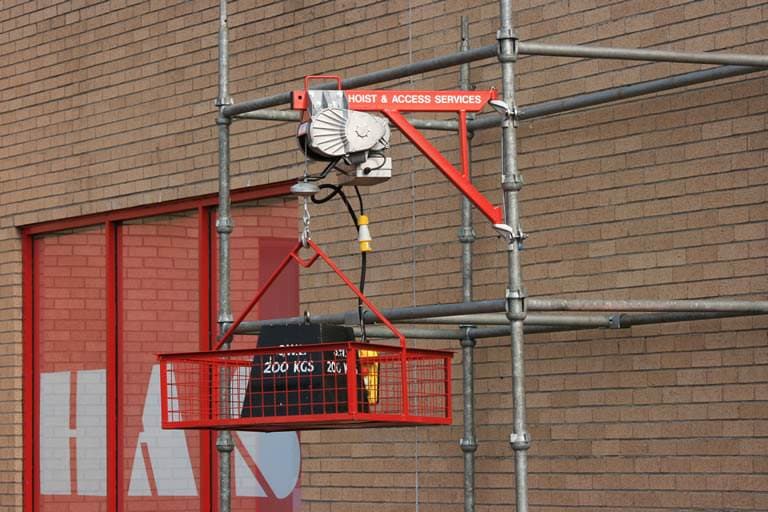
A material hoist is a different animal. It is a platform or car that runs up and down a mast tied to the building or the scaffold, and its job is repetition. Drywall, ten lifts a day. Cladding panels, every day for six weeks. Mortar, brick, insulation, tools, tarps, and the hundred small loads that keep eight floors of trades working. Some units move material only; others are rated to carry personnel as well, which changes the compliance picture and the productivity math at the same time.
The mistake we see is treating the crane as the default for everything vertical. On a mid-rise envelope or interior fit-out, the majority of lifts are not crane work. They are hoist work being done expensively.
The load-cycle math
Here is the comparison that matters, and it has nothing to do with the daily rate of either machine.
Count the vertical lifts your project needs per week, and sort them into two piles: unique heavy picks, and repetitive material movement. Then look at who waits, and for how long, when those repetitive loads depend on a shared crane.
A tower crane on a residential mid-rise typically gives each trade a window, and those windows collapse the moment the schedule slips. Your envelope crew needs panels on floor six at 7 a.m., but the hook is committed to formwork until ten. So your crew roughs in something else, or they wait. Multiply that by four crews and twelve weeks, and the “free” crane time you assumed in the bid has quietly cost more than a season of material hoist rental.
A mobile crane brought in for material runs has the opposite problem. Every visit carries mobilization, setup, an operator, and often a road or lane closure on tight sites. In Metro Vancouver, a mobile crane day typically runs well into four figures once all of that is counted. That is fine for a day of heavy picks. It is a painful way to move drywall.
A hoist inverts the equation. One-time install cost, a weekly rental rate, and then unlimited cycles all day, every day, run by your own crews. No operator booking. No competing trades. The per-lift cost drops with every load you send up, which is exactly the shape of cost curve you want on a machine whose whole purpose is repetition.
Weather and wind, the Lower Mainland version
There is a second factor that Metro Vancouver schedules can’t ignore: crane picks are wind-limited, and our shoulder seasons deliver wind and rain in long, schedule-eating stretches.
When a crane shuts down for wind, everything that depended on it stops. A mast-tied hoist keeps running in conditions that would ground a pick, because the load is captive to the mast rather than swinging on a line. On envelope remediation jobs, where the whole point is to chase dry weather windows between October and March, that difference decides whether a good-weather week produces five days of work or three.
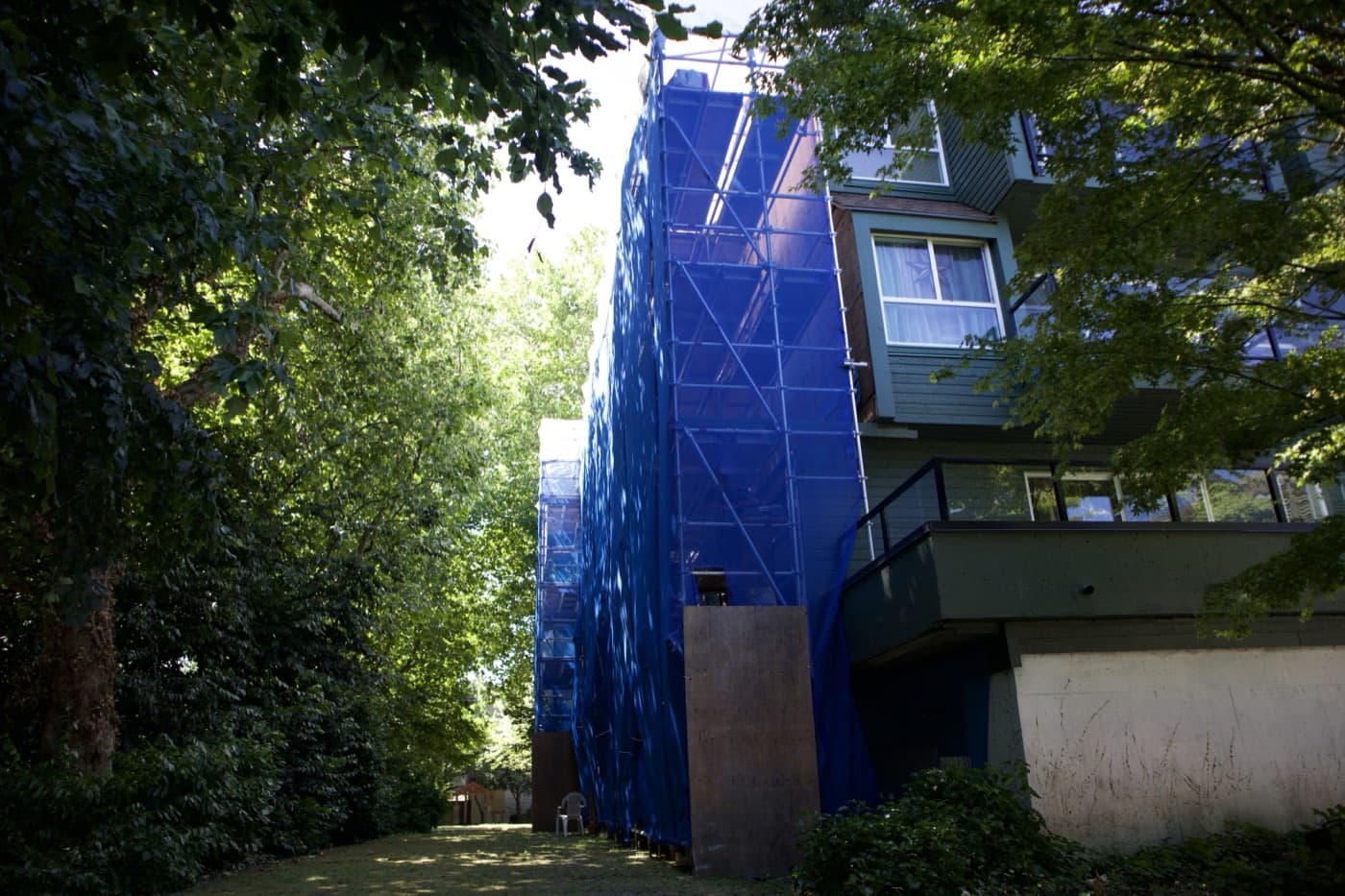
We wrote about this dynamic in more detail from the enclosure side in our shrink wrap piece; the short version is that weather protection and weather-independent lifting are the two halves of keeping a BC exterior schedule intact through the wet months.
What drives the cost of each option
No two sites price the same, so treat these as the levers, not a quote.
Crane time. Mobilization per visit, hourly or daily operator rates, rigging crew, permits and traffic management if the crane sits on the street, and standby time when weather or site readiness delays the pick. Costs scale with the number of visits, which is why cranes suit concentrated lifting and punish scattered lifting.
Material hoist. Install and dismantle labour, the weekly or monthly rental rate, mast height and tie-in requirements, power supply, and whether the unit is material-only or rated for personnel. Costs are front-loaded and then flatten, which is why hoists suit long durations and punish two-week projects. Rated capacity varies by unit and is confirmed on the manufacturer’s spec sheet and in the engineering drawings, not by anyone’s optimism on site.
Duration is typically the deciding lever. Under roughly a month of vertical work, the install cost of a hoist is hard to justify and scheduled crane days usually win. Past six to eight weeks of steady material movement, the hoist almost always comes out ahead, subject to site assessment. In between is where you want someone to actually run your lift counts rather than guess.
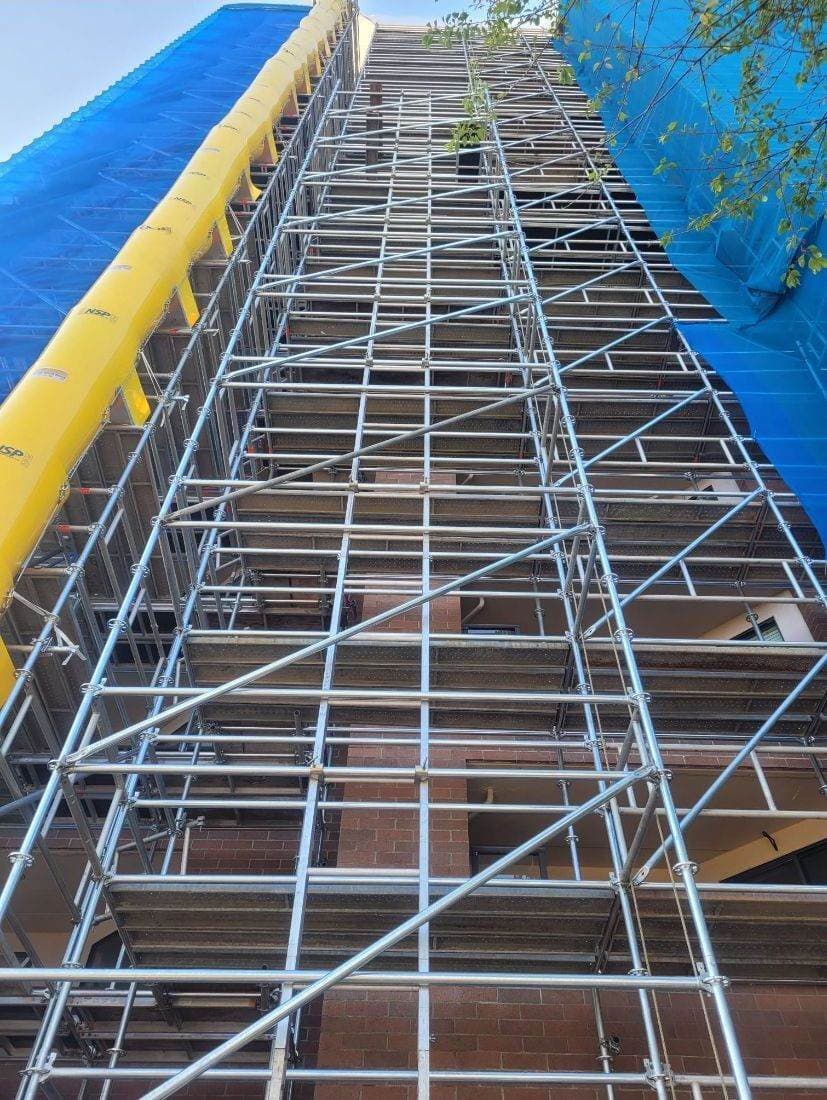
One more lever that gets missed: integration with the access package. If scaffolding is going up anyway, the hoist mast, ties, and landings can be designed into the scaffold from day one. Bolting a hoist onto an access plan as an afterthought means re-engineering ties mid-job, and rework on an engineered structure is where mid-rise budgets go to die. This is the argument for having scaffold, hoist, and chutes designed under one roof instead of sourced from three suppliers who have never seen each other’s drawings.
An eight-storey example from Burnaby
A scenario we see regularly: an eight-storey residential building near Metrotown in Burnaby, full envelope remediation, cladding off and on, twelve to sixteen weeks of exterior work with scaffold on two elevations.
Crane-only version: material deliveries land on the street, a mobile crane is booked roughly weekly to load floors, and between crane days the crews hand-bomb material through the building’s freight elevator, to the delight of exactly no one, least of all the strata. Every crane day needs a lane closure permit from the city. Two of them get scrubbed for wind.
Hoist version: a material hoist goes up with the scaffold, tied into the same engineered structure, with landings at each working level. Deliveries get forklifted to the hoist base and go up the same day. The crane still comes, once, for the rooftop mechanical units, because that is genuine crane work. The building’s elevator stays clean, the resident complaints drop, and the envelope crew’s production stops depending on anyone else’s schedule.
On jobs of this shape across Burnaby, Surrey, New Westminster, and Coquitlam, the second version has been the cheaper one far more often than the first, and it is not usually close. The exception is the short, pick-heavy project, which is why the lift count comes before the recommendation.
Who signs off on what
The compliance picture matters because hoists and scaffolds live under different parts of WorkSafeBC’s Occupational Health and Safety Regulation. Scaffolds fall under Part 13. Cranes and hoists fall under Part 14, which points to the applicable CSA safety standards for hoist design and operation. A material hoist tied to a scaffold touches both, and the tie-in loads belong in the engineering drawings for the scaffold, not on a sticky note.
Practically, that means three things a GC should expect from whoever supplies the hoist: engineered drawings covering the mast ties and base support, documented inspections, and operators or users trained on that specific equipment. A prime contractor carries the site-wide safety obligation either way; a supplier who shows up with paperwork in order takes a real slice of that liability exposure off your desk. A supplier who doesn’t, hands you their problems.
A&K Scaffolding installs material hoists as part of a full access package: scaffold, hoist, debris chutes, and shrink wrap designed together, installed by our crews, and backed by engineering. We work to WorkSafeBC requirements and CSA standards, we’re fully insured, and the hoist stays maintained while it is on site, which is what matters on the morning a fault threatens the day’s production. You can see the full scope of what we install on our services page.
Our recommendation
Stop defaulting to the crane. Book crane time for the picks only a crane can do, and put everything repetitive on a hoist as soon as your vertical work runs past a month or so. On mid-rise envelope and fit-out jobs in Metro Vancouver, that split typically saves money, and it reliably saves schedule, which on a strata remediation is often worth more.
If you’re staring at a lift list and a site plan trying to decide, send them to us. We’ll run the counts against real install and weekly-rate numbers for your building and tell you plainly which way the math points, even if the answer is “book the crane.” Request an estimate or call (778) 375-5349. The estimate comes back in one to three business days.
Frequently asked questions
When does a material hoist make more sense than crane time?
Duration is typically the deciding lever. Under roughly a month of vertical work, the install cost of a hoist is hard to justify and scheduled crane days usually win. Past six to eight weeks of steady material movement, the hoist almost always comes out ahead, subject to site assessment. In between, run the actual lift counts for the building instead of guessing.
What is each machine actually good at?
A crane handles heavy, awkward or one-time picks: rooftop HVAC units, structural steel, bundles of trusses. A material hoist handles repetition. Drywall, cladding panels, mortar, brick, insulation and the small loads that keep several floors of trades working, run by your own crews with no operator booking. Some hoists move material only, while others are rated to carry personnel as well.
Does wind stop a material hoist the way it stops a crane?
Crane picks are wind-limited, and Lower Mainland shoulder seasons bring long stretches of wind and rain. A mast-tied hoist keeps running in conditions that would ground a pick, because the load is captive to the mast rather than swinging on a line. On envelope jobs chasing dry windows between October and March, that decides whether a good week gives five days of work or three.
Which WorkSafeBC rules apply to a hoist tied to scaffold?
Scaffolds fall under Part 13 of the OHS Regulation. Cranes and hoists fall under Part 14, which points to the applicable CSA standards for hoist design and operation. A hoist tied to a scaffold touches both, so the tie-in loads belong in the scaffold engineering drawings. Expect engineered drawings for mast ties and base support, documented inspections, and users trained on that equipment.