The first quote a GC opens is almost never the one they sign. Three numbers come in for the same building, and the spread is wide enough that someone has to be wrong. Usually nobody is wrong. The yards are quoting different things, and the line items the quotes leave out are where the money actually goes.
Scaffolding cost in BC is one of the easier construction line items to misread on paper. The hourly rate looks reasonable. The weekly rental looks fair. Then week six arrives, the envelope subcontractor needs another three weeks because the weather pushed the sealant work, and the project manager is suddenly explaining a four-figure overrun on a job that was supposed to be buttoned up.
This is a practitioner’s breakdown of how scaffolding quotes are actually built in the Lower Mainland: what the line items mean, why two valid quotes can differ by 40%, and where the rental-only number quietly stops being the cheapest one.
The four cost buckets every quote contains
A scaffolding quote in BC is built from four buckets. Some yards itemize them, some bury them in a flat number. Either way they’re all in there.
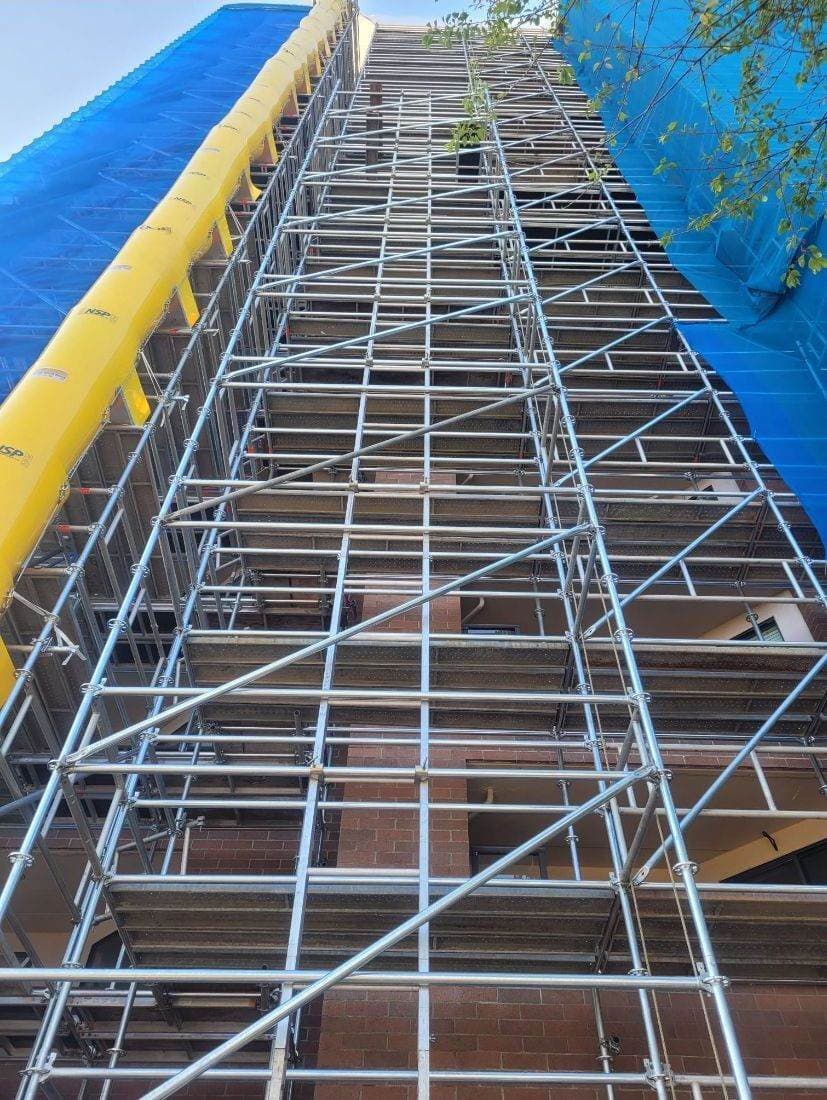
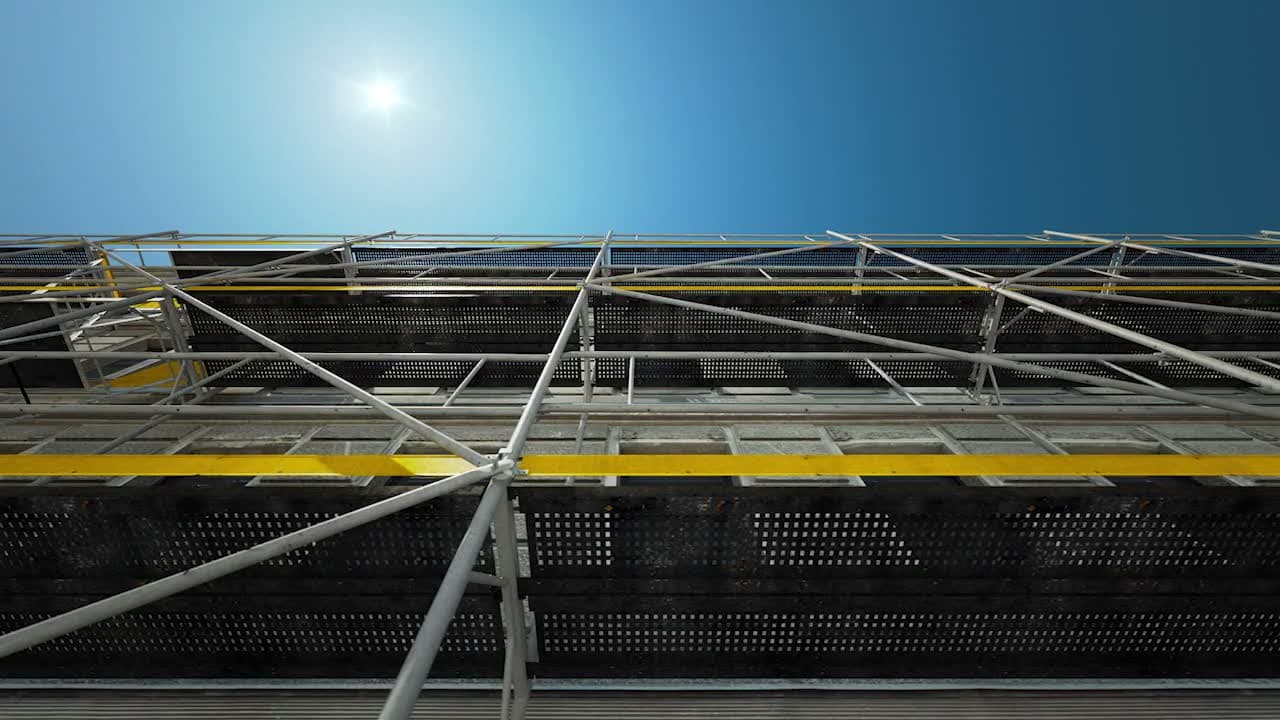
Labour for erection and dismantle. This is the biggest single line on most jobs. Crews arrive, stage materials, build the scaffold, tag it, and come back at the end to take it down. The hours scale with height, footprint complexity, ground conditions, and what the trades above you need access to. A straight rectangular high-rise wall is cheaper per square foot than a building with bay windows, balconies, and a porte-cochère.
Equipment rental, charged per week. The crew leaves, the scaffold stays up, and the meter runs. Most yards bill in weekly increments with a minimum (typically four weeks). A two-week job and a five-week job at the same site can look like the same cost on paper. They’re not. The five-week job is paying rental on every frame, plank, and tie for an extra month.
Engineering and design. Anything over the height or load threshold in WorkSafeBC’s Part 13 OHS Regulation needs engineered drawings stamped by a P.Eng. Suspended access, cantilevered platforms, anything supporting unusual point loads: these all trigger engineering before a single frame goes up. The cost is real, and skipping the line item just means you’re pushing the work onto the GC’s structural engineer instead.
Transport, mobilization, and site logistics. Trucks loaded at the yard, delivered to site, staged in a laydown area, then reversed at the end. Tight downtown sites add traffic management. Sites with no laydown add multiple smaller deliveries. Hospitals and government buildings add security escorts. None of this shows up if you’re comparing “per square foot” numbers from two different yards.
Why “per square foot” comparisons mislead
The first thing a project manager does with three quotes is divide the bottom line by the wrapped area. The lowest number wins. The problem is that the lowest number is usually quoting the smallest scope.
A rental-only quote covers equipment and transport. The contractor’s own crew erects and dismantles. That works on a simple ground-level scaffold for a residential reno. It stops working the moment the building goes above three storeys, the engineering thresholds kick in, or the GC’s crew doesn’t actually have qualified scaffold erectors on payroll.
A turnkey quote covering install, rental, engineering, and dismantle looks higher per square foot because it’s pricing a bigger scope. The hours the GC’s crew would have spent erecting are inside it. The engineering is inside it. The site-specific risk is inside it.
The right comparison isn’t number-against-number. It’s scope-against-scope. Get every yard quoting the same five line items, or pull them apart yourself before you sign.
Where the cheapest quote stops being the cheapest
The rental-only number wins on week one. It usually loses by week six. Three failure modes drive the crossover.
The first is the rental clock. A rental-only quote assumes the GC’s crew puts the scaffold up fast and takes it down fast. If the install slips by a week because the GC’s people are stretched across three sites, that’s a week of rental on the meter for nothing. Three slips like that on a high-rise envelope job is a month of equipment cost with zero progress.
The second is rework. Scaffold that isn’t tagged, signed off, or built to the engineering drawing doesn’t pass a WorkSafeBC inspection. When an officer flags it, the trades stop, the scaffold gets modified or rebuilt, and the schedule slips while the rental meter keeps running. The savings from the cheaper quote get eaten in a single inspection day.
The third is the change-order tax. A rental-only contract usually treats every modification as a new transaction: adding a level, repositioning a tower, adapting around a trade’s needs. A full-service contract on a long job absorbs many of those changes inside the scope. On a four-week shrink-wrapped envelope project where the painter needs the access reconfigured twice, the math flips fast.
None of this means rental-only is wrong. On a short, simple, low-rise scope with a crew that has qualified scaffold erectors, it’s the right answer. On anything with height, complexity, or a long rental tail, it’s the most expensive option dressed up as the cheapest.
What actually drives a quote up
Site walkthroughs surface the cost drivers a desk quote can’t. Six come up almost every time on a commercial or high-rise job in Metro Vancouver.
Height and access complexity. A 4-storey strata in New Westminster is a different beast from an 18-storey residential redevelopment in Maple Ridge. Doubling the height more than doubles the labour because every frame above the second lift is a hoisting operation, not a hand-placement.
Building footprint. Bay windows, recessed entries, mechanical penetrations, balconies. Every break in the wall plane is another corner to detail, more clamps, more time per linear foot.
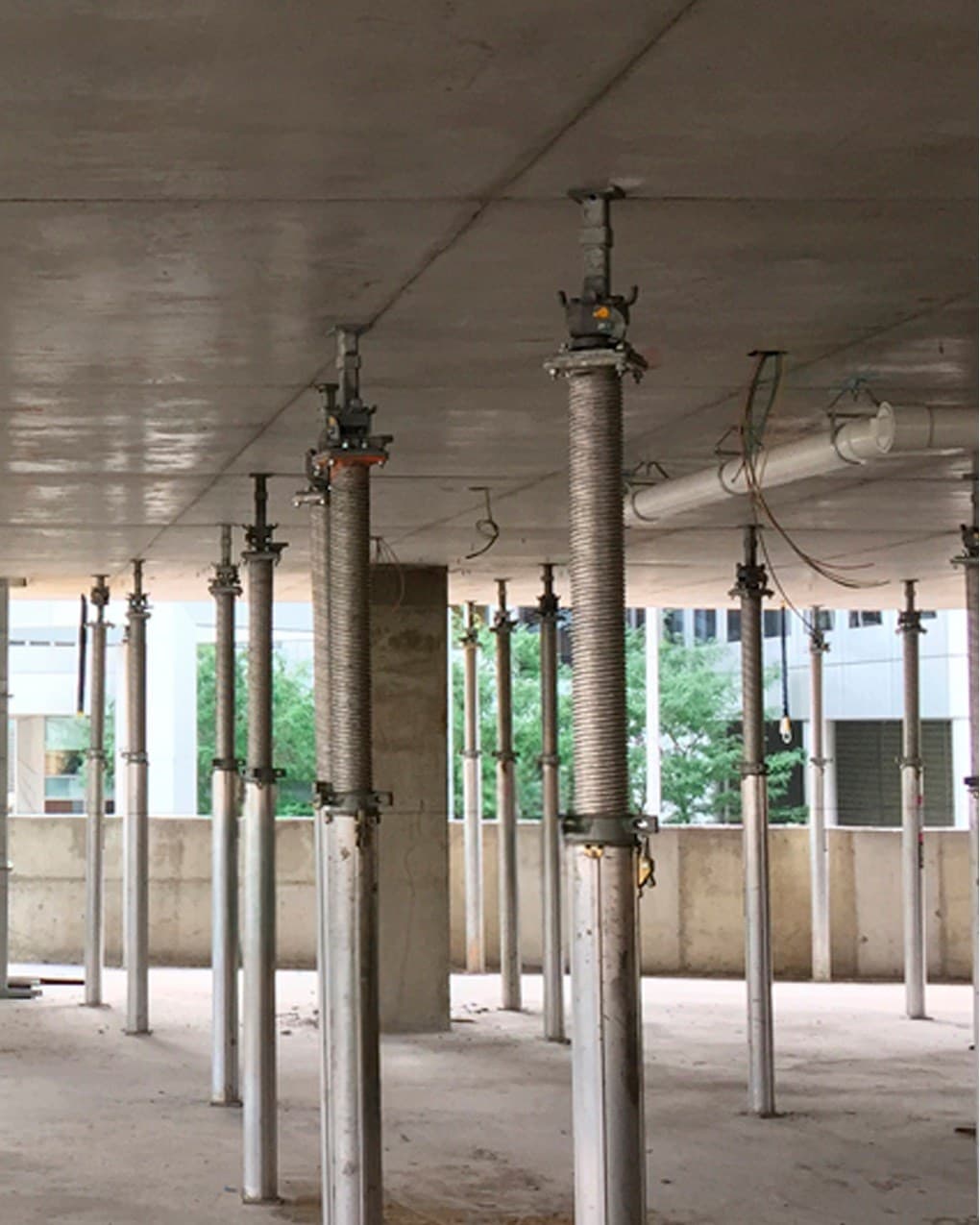
Ground conditions. Base plates on grade need adequate bearing. Sloped sites, soft fill, or asphalt that won’t take point loads all push the design toward sleepers, mudsills, or in some cases shoring underneath the base. None of that shows up on satellite imagery.
Tie-ins. Scaffold above a certain height needs to be tied back to the structure. The number and type of ties scales with height and wind exposure. High-rise envelope jobs in Burnaby and Coquitlam often need tie-ins through windows that haven’t been removed yet, which means coordination with glazing and abatement before the scaffold can come up.
Adjacent traffic and pedestrians. A site on a quiet block in Delta is cheaper to scaffold than the same building on a busy Surrey arterial. Pedestrian protection, sidewalk closures, and traffic control plans all add labour and equipment.
Project duration. A six-week rental on a fast envelope job has very different math from a six-month rental on a heritage restoration. Long jobs absorb mobilization costs better. Short jobs pay the full setup overhead against a small number of rental weeks.
A real-world scenario: 12-storey envelope in Burnaby
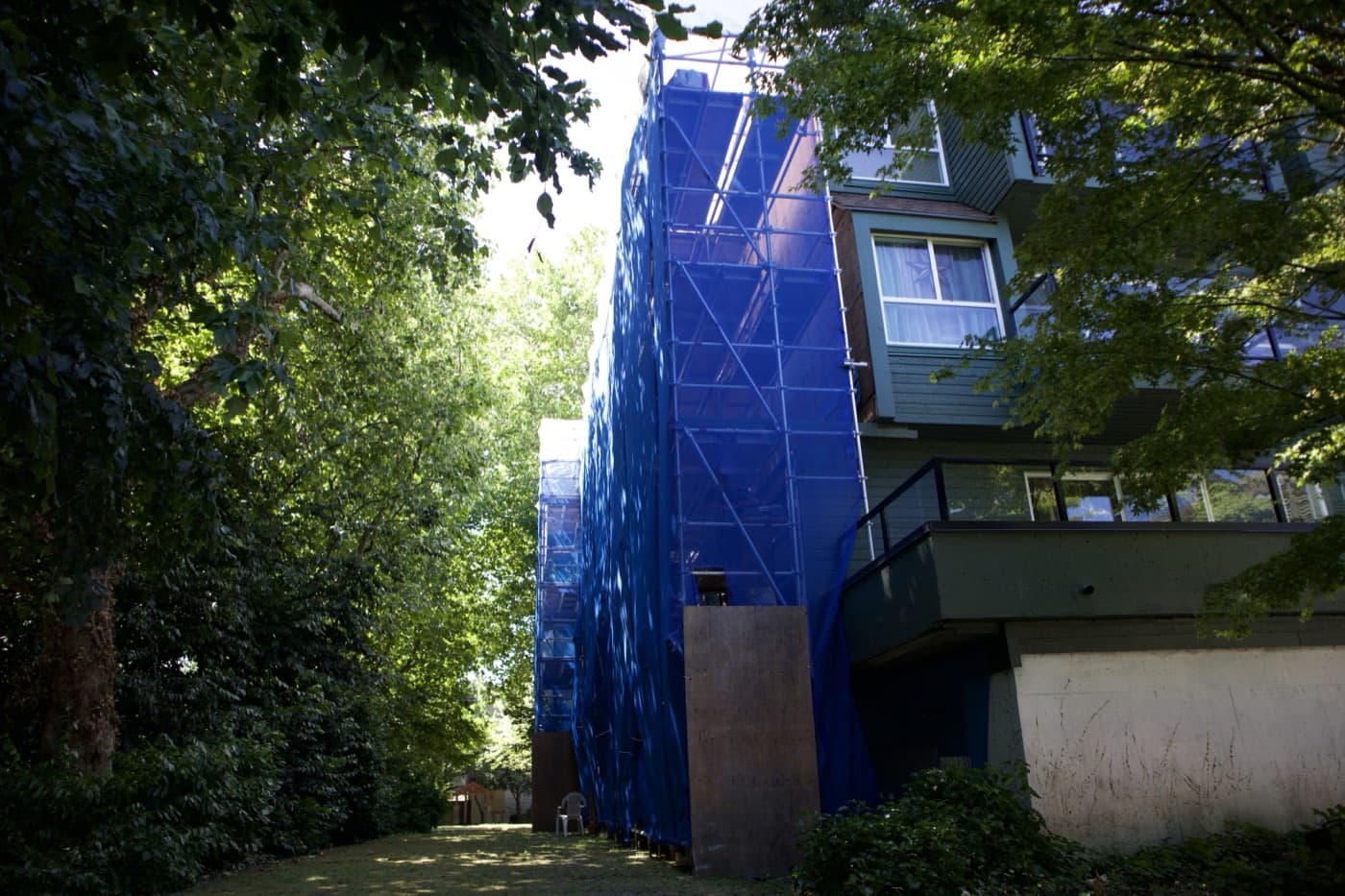
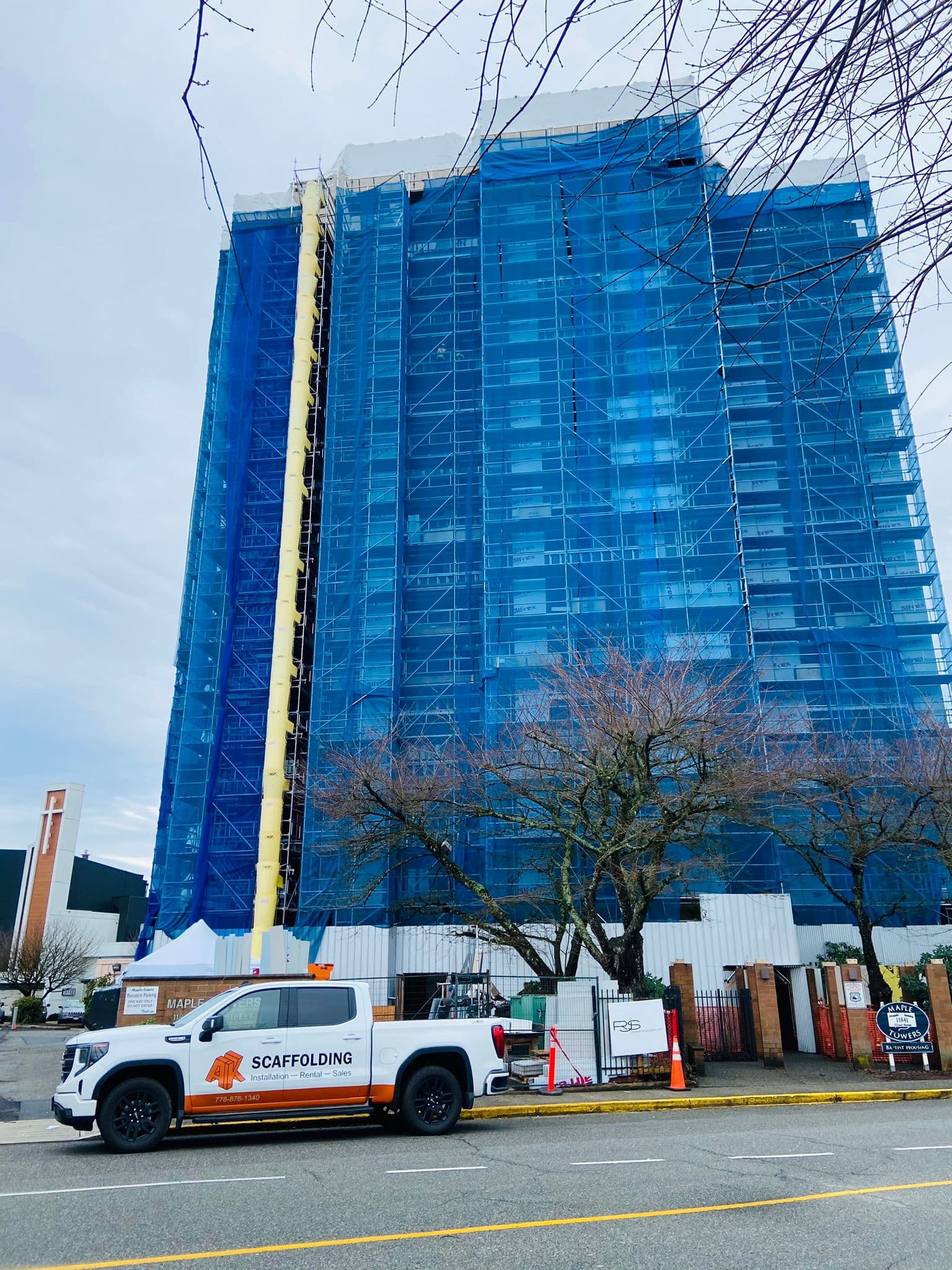
Take a 12-storey residential envelope remediation in Burnaby, a common scope for Metro Vancouver property managers. Full perimeter access, four sides, 6 to 8 weeks of active work, sealant and cladding repair, with shrink wrap needed because the work is scheduled into October.
A rental-only quote on this job typically prices the equipment at one number, with the strata or GC sourcing erection labour separately. On paper the rental looks low. In practice, the GC’s crew is rarely a qualified scaffold team, so a third party comes in to erect anyway, and the install runs a week longer than budgeted because the crew is unfamiliar with the equipment.
By week three the sealant subtrade hits a weather window and needs the south face reconfigured to expose a section of cladding nobody planned for. On a rental-only contract this is a change order. On a turnkey contract with the same crew that built the scaffold still on call, it’s a phone call and a half-day adjustment.
By week seven the project is running long. The rental clock has added two weeks. The change orders have added a third. The number that started below the turnkey quote is now above it, and the strata is asking why.
This isn’t hypothetical. It’s the pattern that repeats on Lower Mainland envelope jobs every season.
What one contract actually buys you
A&K runs installation, shoring, engineering, shrink wrap, hoists and chutes under one contract. That is the part that turns into real savings. When a sealant crew needs the access reconfigured before the next forecast window, the change goes to the crew already on the job instead of into a second round of procurement.
Turnkey under one roof means the engineering, the install, and the modifications come from the same crew. Drawings stay current. Site-specific quirks get captured the first time, not relearned every change. Compliance documentation (inspection tags, weekly checks, dismantle sign-off) sits with one party.
For a GC or property manager, that consolidation is the unglamorous reason a turnkey quote prices out better over the life of a job. One vendor, one number, one set of liability documents, one phone to call when the inspection officer shows up unannounced.
A&K’s crews work to WorkSafeBC’s Part 13 OHS Regulation and CSA standards across all scopes. Inspection tags get installed and updated. Engineered drawings are stamped where the height or load triggers require them. Site assessments happen before quotes, not after problems.
Reading your next quote: a checklist
Before signing any scaffolding quote on a Metro Vancouver commercial or high-rise job, work through five questions.
Does it list erection and dismantle labour as a separate line, or is it bundled inside a flat number? If bundled, ask what scope is included.
What is the assumed rental period, and what does each extra week cost? Build the worst-case schedule against that number, not the optimistic one.
Who is responsible for engineering, and at what trigger point? If the answer is “the GC”, price that line separately and add it back to the comparison.
What happens to the price when the scope changes mid-job for a new level, repositioned tower, or additional tie-ins? Get a change-order rate, not a promise.
Who carries the WorkSafeBC compliance documentation? If the inspection officer arrives on Monday, who’s holding the tags and drawings?
The lowest number on the first page rarely survives those five questions. The quote that does is usually the one that costs less by month three.
Start with a site assessment, not a number
The honest answer to “how much does scaffolding cost in BC” is: it depends on the building, the scope, and the schedule, and any quote that doesn’t come from a site walkthrough is a guess. Subject to site assessment, typical rates for commercial and high-rise access in Metro Vancouver fall inside a wide range, and the spread comes from the cost drivers above, not from any single yard being cheap or expensive.
A&K covers Delta, Vancouver, Surrey, Burnaby, Richmond, Coquitlam, New Westminster, Langley, and Maple Ridge with full-service scaffolding, shrink wrap, hoists, chutes, and engineering. Site assessments are free, estimates typically come back inside one to three business days with labour, material and equipment time itemized, and modifications during the job sit inside the same contract.
To get a quote that holds up against the math above, request an estimate at our estimate form or call (778) 375-5349. For the full equipment range and scopes covered, see the services page.
Frequently asked questions
What goes into a scaffolding quote in BC?
Four buckets. Labour for erection and dismantle, usually the biggest single line. Equipment charged per week, often with a minimum of typically four weeks. Engineering and design for anything over the height or load thresholds in WorkSafeBC’s Part 13. And transport, mobilization and site logistics, including traffic management on tight downtown sites. Some yards itemize them, others bury them in one number.
Why do per-square-foot scaffolding comparisons mislead?
The lowest number usually quotes the smallest scope. A rental-only quote covers equipment and transport, while the contractor’s own crew erects and dismantles. A turnkey quote looks higher per square foot because it also prices install, engineering and dismantle. Compare scope against scope: get every yard quoting the same line items, or pull them apart yourself before you sign.
When does the cheapest scaffolding quote stop being the cheapest?
The rental-only number wins on week one and usually loses by week six. Three things drive the crossover: the rental clock running while the install slips, rework when a scaffold that isn’t tagged or built to the drawing fails a WorkSafeBC inspection, and change orders for every modification. On a short, simple, low-rise scope with qualified erectors on the crew, rental-only is still right.
What should I ask before signing a scaffolding quote?
Five questions. Is erection and dismantle labour a separate line or bundled into a flat number? What period is assumed, and what does each extra week cost? Who is responsible for engineering, and at what trigger point? What happens to the price when the scope changes mid-job? And who carries the WorkSafeBC compliance documentation when the inspection officer arrives?